Communalise the shopping malls?
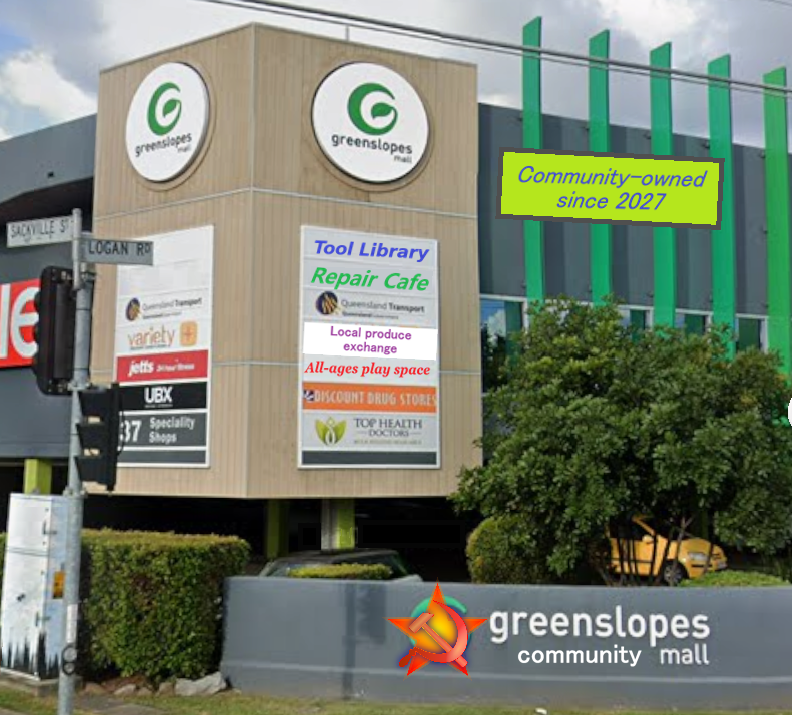
I've been thinking lately about how we retrofit suburbia in response to a changing climate, while also following conversations out of North America about the decline of unprofitable malls and what to do with them.
But it's only since becoming a father and experiencing the relentless toddler insistence on venturing out into the world even when it's rainy or extremely hot that I've seriously grappled with the untapped social and cultural potential of shopping centres.
So the Green Institute's recent proposal to compulsorily acquire hundreds of Woolworths and Coles supermarkets got me thinking – why not go a step further and buy the whole shopping centre?
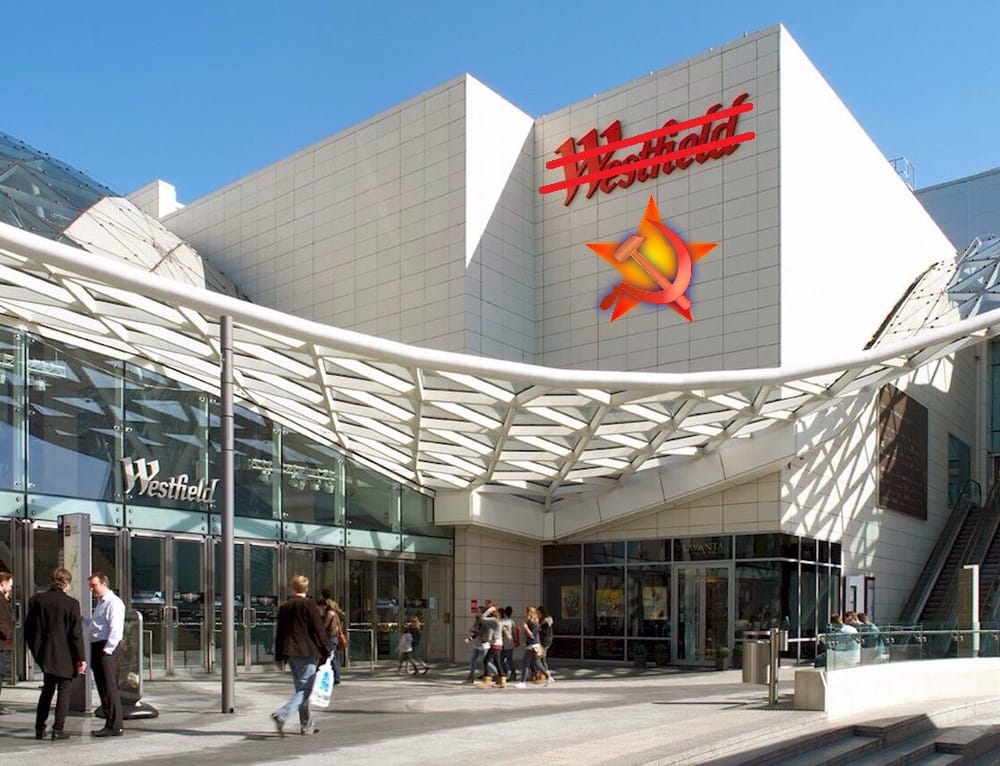
I've always hated shopping malls... The bamboozling, cookie-cutter layouts and windowless designs that can make you forget the time of day and even what city you're in... Car-centric transport planning that encourages shoppers and retail workers to drive longer distances rather than walking or riding to a local high-street... The clinic-bright lights and ubiquitous surveillance... And of course the endless barrage of commercial advertising to convince people to buy stuff they don't need.
To me, shopping malls epitomise so many of the worst aspects of western capitalism's unsustainable consumerism.
But radicals who crave a better world also have to acknowledge (however grudgingly) that across Australian suburbia, malls have evolved to play many of the roles of a public town square within neighbourhoods that often lack high-quality public spaces. Most Australians live in suburbia (that's not changing any time soon). And many suburban communities revolve around the nearest large shopping centre.
 Jonathan Sriranganathan
It's no accident these spaces often become go-to meetup destinations for teenagers, retirees and parents of young kids alike. For all their faults, they're generally a neighbourhood's only large, air-conditioned, weatherproof space that doesn't charge an entry fee. And they're frequently also public transport hubs, making them among the city's most accessible destinations for anyone who doesn't drive.
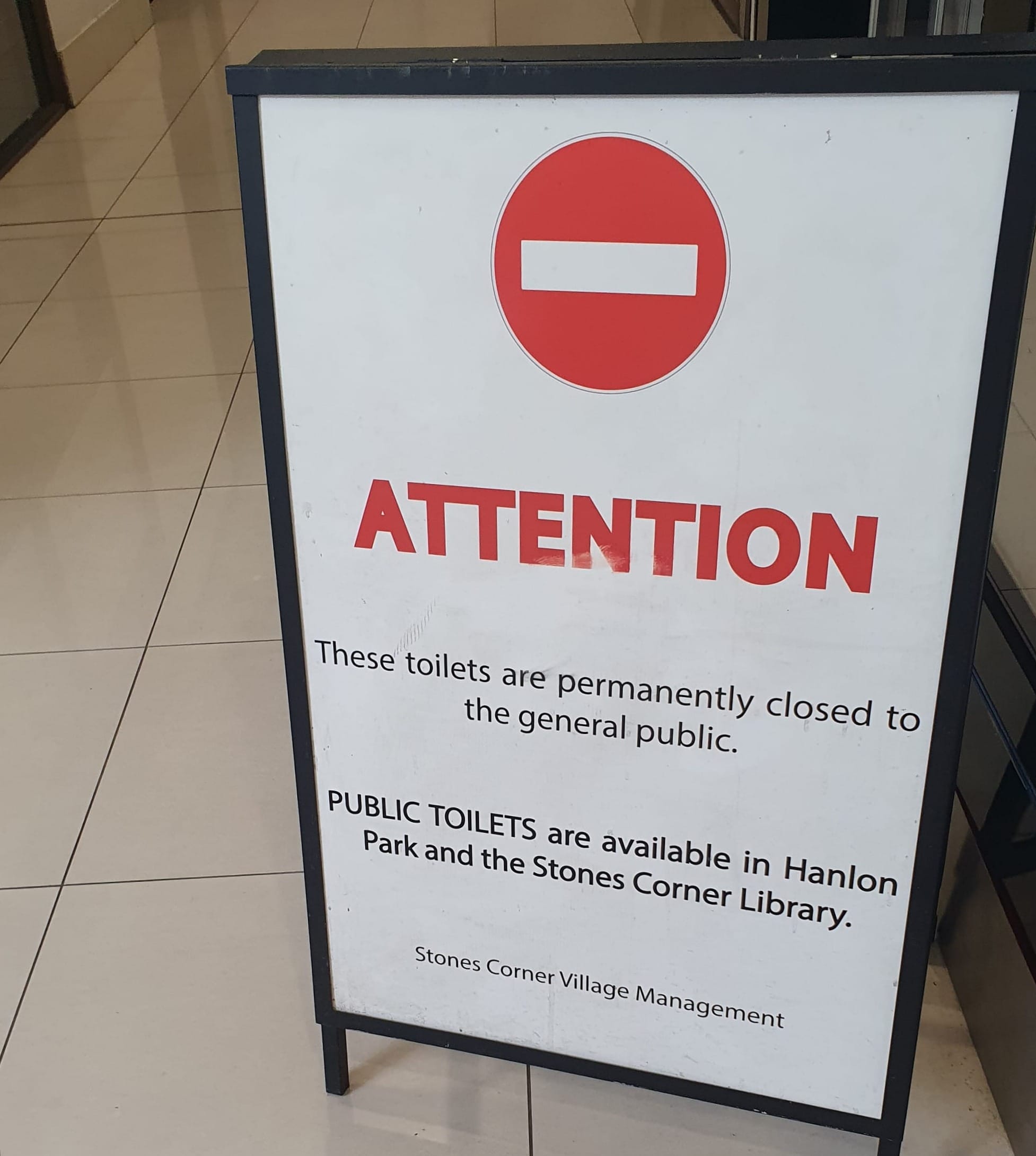
But as privately-owned buildings operated for profit, they still have major limitations that compromise the public functions they play...
Over-zealous and unaccountable security guards can become petty tyrants, arbitrarily banning people – most often younger people of colour – from the one place they can hang out with their friends on a hot day.
Community groups and non-profit organisations seeking to connect with the wider public are threatened with trespass charges if they attempt to advocate or organise politically in such spaces.
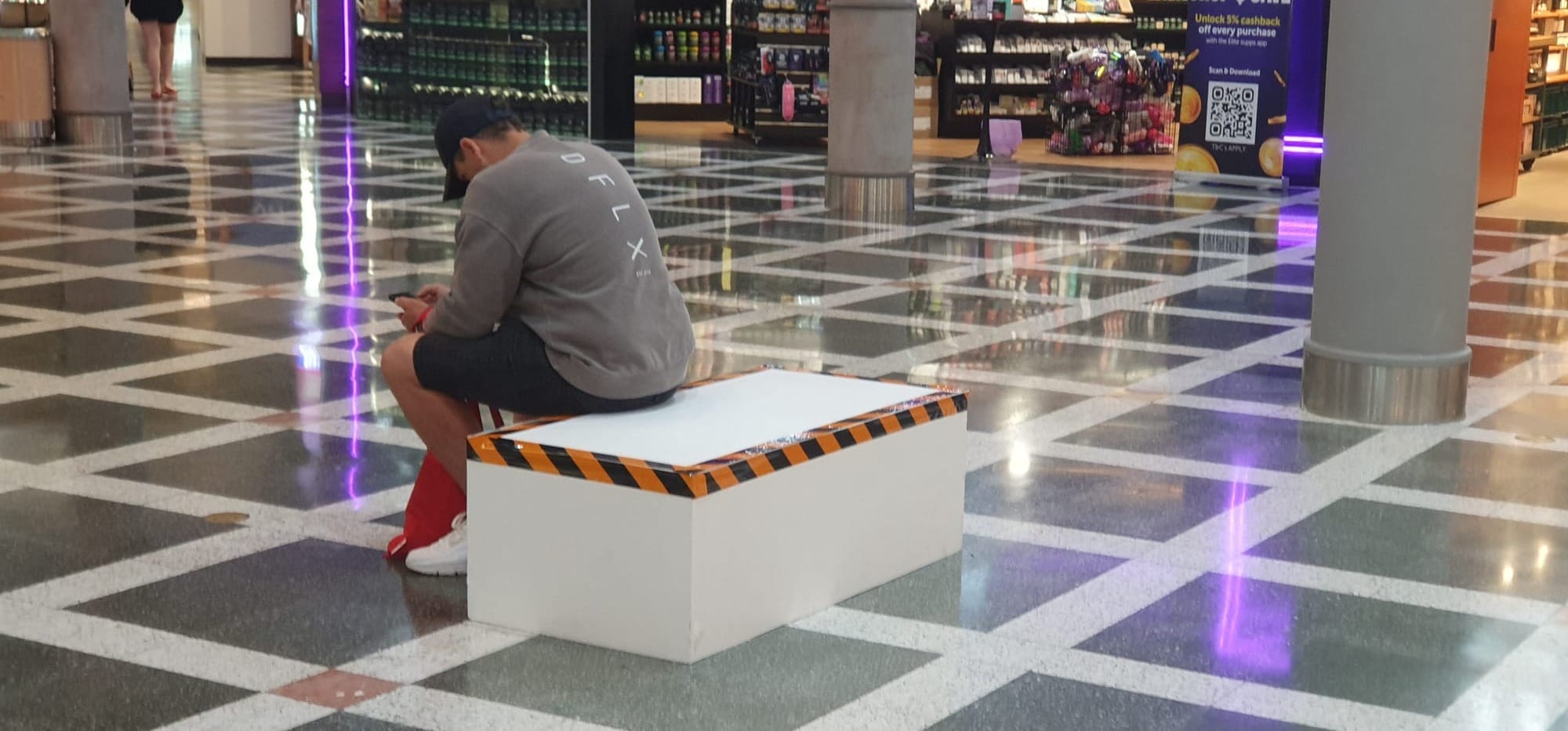
And while the largest malls often have facilities like parents' rooms and maybe even some mediocre indoor playgrounds (a godsend for families on a rainy day), there never seem to be enough comfy seats for everyone who wants to just sit and chill, or opportunities for artists and musicians to share their work with the world.
They're also an over-stimulating hellscape for anyone with noise and light sensitivities.
But if we took away the profit motive that shapes how these spaces are designed and managed, replacing private corporations with democratically-controlled non-profit entities, a lot of these limitations are easily solved.
You could still rent out individual tenancies to private retail businesses, but if the building is publicly owned, you could reinvest leasing revenue into maintaining and improving mall infrastructure and facilities, rather than a significant proportion being siphoned off to pay shareholder dividends.
Imagining a non-profit mall
Here's where I'd start...
Replace walkway-cluttering advertising screens with community noticeboards, and hand over vacant wall space to local artist collectives to curate as they wish.
Dial back the bright lighting, and switch off the background music that's too quiet to hear properly but still just loud enough to be annoying.
Add more comfy couches, quiet areas, and drinking water fountains.
Swap out most of the security guards for social workers who specialise in conflict de-escalation and addiction support.
If the mall doesn't already have a public library, establish one in a vacant tenancy.
Designate one of the undercover carparks as a free-entry roller skating rink and skate park (beef up inter-suburb public transport services and bikeway connections to offset parking loss).
And if there's demand for it, chuck in a couple more kids' play spaces and maybe even an indoor rock-climbing wall beside the main escalator shafts.
You now have a giant, all-weather, all-ages community space that's less overtly about consumerism alone, and functions more like a civic hub, with significant potential to adapt and respond to emerging public needs in an era of climate instability, economic upheaval and geo-political realignment.
I anticipate some readers will jump immediately to thinking about potential financial and logistical barriers within the confines of capitalism/techno-feudalism... How much would it cost to buy one of these massive properties? Who pays for all the social workers to support the likely influx of vulnerable people seeking shelter? Will the contractors who fix the elevators or polish the floors have to go through bureaucratic and inefficient government tendering processes? What happens if one of the kids skating in the carpark hurts themself?
So I need to emphasise that this is not some kind of standalone policy proposal where nothing else in society would change. I'm thinking ahead to a not-too-distant future where the compounding challenges and contradictions of global warming and colonial-capitalism force us to rethink every aspect of how we organise our cities and towns (including the idea that profit-driven corporations' 'property rights' to large chunks of our community must be respected).
What should we do with these massive buildings during the transition decades, when mitigating and adapting to climate change requires us to shift to a very different kind of world (and most existing mall tenant businesses likely cease to be viable for various reasons)?
If major shopping centres have become de facto public spaces, and will have increasing utility in a warmer world (even as they're becoming less profitable), how should we maintain and enhance this function, and ensure they're genuinely accessible for everyone, including political groups and community projects whose aims might be hostile to the capitalist-consumerist values around which malls currently revolve?
The public benefit 'business case'
All levels of government are continually falling behind when it comes to securing land and constructing buildings to deliver key public services. Whether it's libraries, health centres, TAFE classrooms, offices and service desks for government departments, or the kinds of community facilities that are leased out cheaply to non-profit projects, the cost of new-build government facilities is rising continually.
This is partly why community infrastructure isn't keeping pace with population growth, why new facilities are often delivered in out-of-the-way locations, and why some councils and state departments are increasingly leasing privately-owned commercial spaces at great expense to taxpayers.
But rather than forking out millions to construct new buildings in neighbourhoods that don't physically have space for them, or handing massive rental payments to private landlords for decades to come, governments could just buy these existing, well-located sites outright and progressively replace retail shops of negligible social utility with the services and facilities residents actually need.
Despite the rise of online retail, Scentre Group – the main owner of Westfield shopping centres – is still routinely reporting profits in the hundreds of millions. But that profitability depends on a range of de facto subsidies and publicly-funded services and infrastructure, without which the mall model probably wouldn't be commercially viable. Some of these include:
- endless government-funded road resurfacing and road corridor expansions to cater for high mall-related traffic volumes
- co-location of public transport services which bring extra foot traffic into these privately-owned mega-sites
- relatively low land taxes and per-square-metre council rates that don't cover the true cost of servicing such precincts
Even putting aside the usual corporate tax avoidance arrangements that most large corporations benefit from, these shopping mall companies are profiting at the public's direct expense.
Meanwhile, for every bustling, successful shopping centre, you can find another one where vacant tenancies are multiplying, fixtures and facilities are deteriorating, and profit-motivated entities are unwilling to invest the capital required to reverse the spiral of decline. These are generally the sites that don't double as major public transport interchanges.
Whether the malls in your city are thriving or struggling, we need to be thinking about long-term future needs.
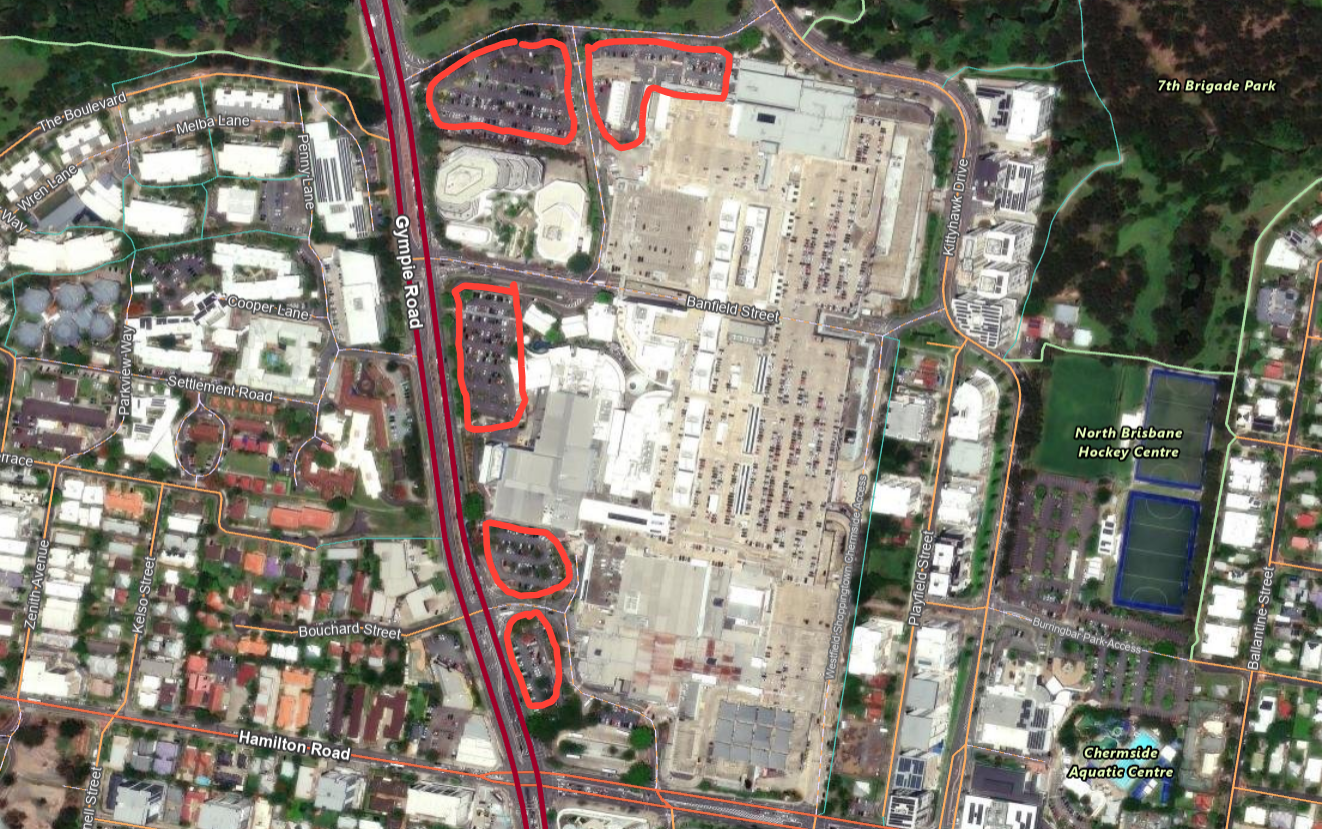
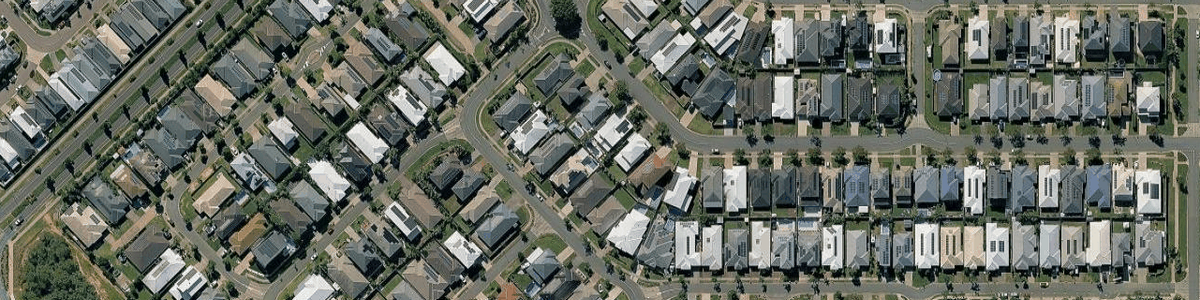
Shopping centres – especially mega-malls – are some of the largest non-residential properties within existing suburbs (where big, developable sites can be hard to find). Their sprawling open-air car-parks (already co-located with public transport) are often ideal sites for high-density public housing.
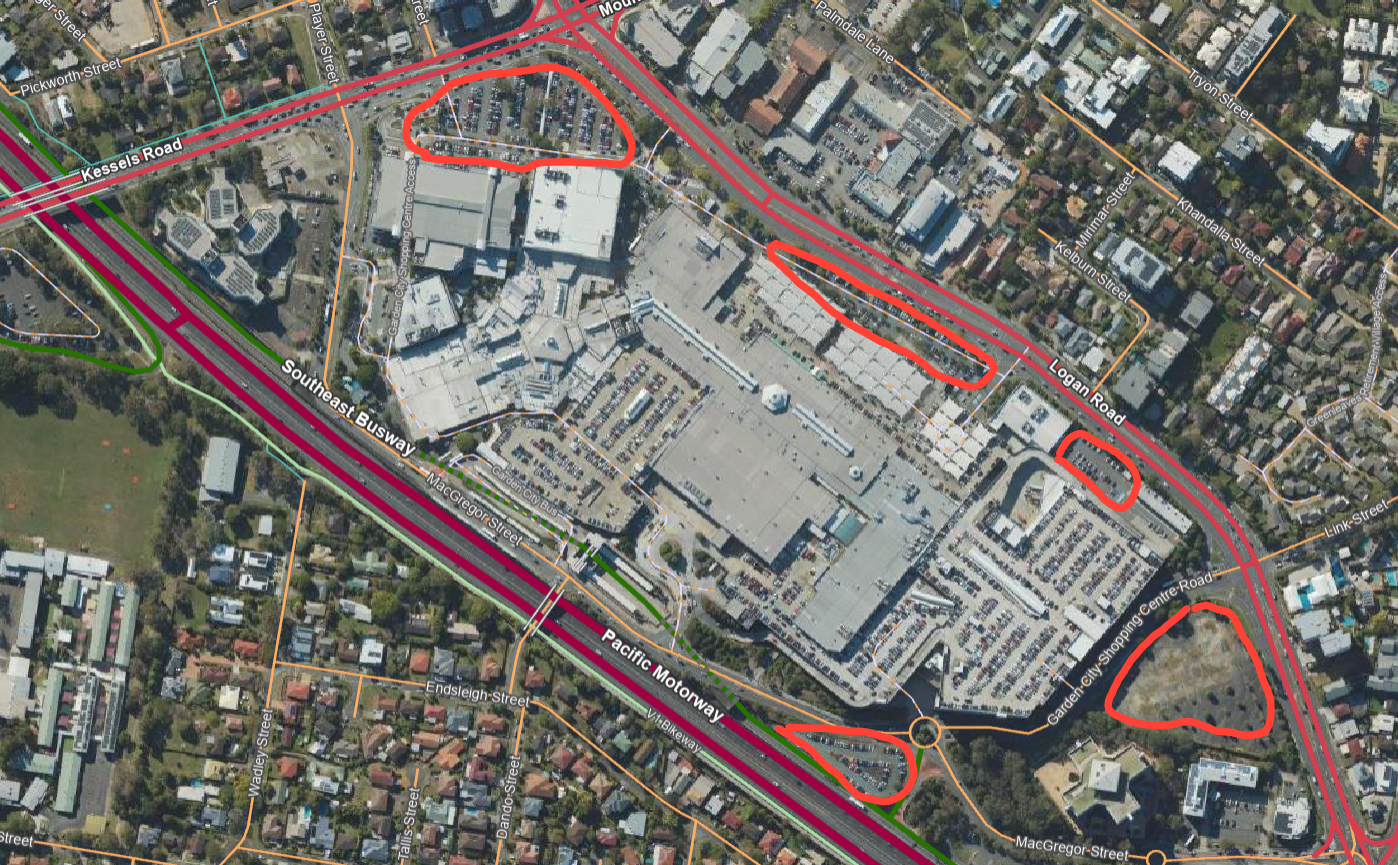
But in addition to the housing development potential, public shopping centres could fill a range of temporary and permanent functions to meet communities' changing needs.
From air-conditioned climate refuges during heat waves, to temporary shelters after floods and severe storms, these large buildings can serve as crucial crisis response nodes. Usually located along major transport corridors, they already have the infrastructure – delivery vehicle loading bays, bathrooms, waste disposal systems etc. – to cater for large numbers of people over prolonged periods.
As capitalist-consumerism declines, individual retail spaces of varying sizes can be repurposed for coworking spaces, tool libraries, repair cafes, crisis support services, medical services, meeting rooms, lecture theatres, artisan workshops, dance studios, artist studios, music recording studios – whatever residents decide their community needs.
As we shift towards cities that prioritise public and active transport over private cars, surplus multistorey carparking space can be utilised not only for skating rinks and other indoor sports, but for concert venues and nightclubs, workshops and equipment storage, lockers for people who lack secure accommodation, battery banks to provide the mall with a backup power supply, and even urban farming of low-light crops like mushrooms.
In some regions, it may also make sense to convert basement parking areas into rainwater storage, or water recycling plants. And it goes without saying that mall rooftops should be used for solar power generation and food production.
These huge sites can fill so many useful needs that will otherwise be difficult to meet within existing built-up urban areas. So while right now the case for public ownership might not seem strong enough, if over coming years, an unprofitable centre is on the verge of being abandoned and land-banked, local authorities should acquire it, rather than allowing it to become an Amazon distribution warehouse or data centre or whatever else the mega-rich might dream up.
Simultaneously, the public subsidies propping up the most profitable mall operators should be wound back. These corporations should be required to contribute far more towards the cost of public transport services and road infrastructure. This would, in all likelihood, significantly reduce the asset value of these sites, making public acquisition at market value more affordable and realistic (even if we haven't yet entered some kind of post-revolutionary context where forcibly nationalising sites owned by massive corporations without 'just terms' compensation becomes politically feasible).
A non-profit mall would evolve continually, changing with communities as consumption-focussed retail businesses die out and new circular economy projects emerge.
So who would run these things?
While 'nationalise the shopping malls' might have been a grabbier heading for this article, my partner Anna rightly recommended the word 'communalise.' Nation-states aren't particularly efficient at delivering services that are well-adapted to local needs, and they are structurally hostile to genuinely democratic decision-making.
Local or state governments are perhaps the only institutions likely to be able to front the capital to buy such properties, but ideally the actual management and decision-making power for these communal, non-profit malls should be handed over to democratically controlled community organisations, which could persist and evolve even as the state itself withers or disintegrates.
 Jonathan Sriranganathan
I imagine such entities might initially function like the many sports clubs and charities that currently lease and manage various government-owned facilities, with committee members elected by a wider membership, working groups that are delegated specific responsibilities, and paid staff who handle day-to-day implementation of the committee's vision.
But as broader society develops beyond capitalist parliamentary governance, embracing different forms of participatory decision-making about how we live our lives, so too would management of these major communal assets. Workers would have a meaningful say, as would the broader community of customers and patrons who use the mall's services and projects. The biggest decisions might be made via neighbourhood assemblies and referenda, while other decisions would be left to the people most affected by them and those who bear responsibility for implementing them.
Like the mall itself, decision-making structures would inevitably change as community's needs and priorities shift. The crucial point is that to succeed as true public spaces that can harmoniously accommodate a range of community projects, government services, and worker-owned businesses under one massive roof, communal malls would have to be run by the community, not an abstracted government entity that's neither democratically responsive nor flexible enough to adapt quickly to changing realities.
Is there even an alternative?
This article obviously isn't a fully fleshed-out policy proposal. It's an invitation to anyone who dreams of a better world to spend a moment thinking about the future of these massive sites and their gravitational influence over suburban culture and community.
The resources used to build these structures are significant. It would be environmentally irresponsible to simply allow such buildings to fall into dereliction if mall business models become less viable.
As Shawn Vulliez from the Seriously Wrong podcast pointed out back in 2021, it's easy to imagine that as major malls become unprofitable, both owners and tenants could start pressuring governments for more subsidies to keep the malls operating in the name of preventing job losses and supporting local businesses.
Bringing them into public ownership is a far superior option.
Useable public spaces are vital to healthy, thriving, connected communities. But within existing suburban neighbourhoods, we generally don't have the room to magically create large, new, air-conditioned public spaces where thousands of people can socialise and connect.
Shopping centres already function as the default 'third place' for a large chunk of the populace, and global warming means that in cities like Brisbane, daytime public meetings in sun-baked streets, squares and parks are becoming far less practical. One way or another, we need to secure other non-profit spaces where we can gather and organise collectively.
There's a lot to dislike about malls as we currently know them. But if you take a moment to imagine how else we could utilise these massive sites, the possibilities are pretty exciting.

Please help my work reach more people. Share this article on social media, or email it to friends. And if you can afford to do so, consider subscribing for as little as $1/week to support me to keep writing.
 Jonathan Sriranganathan




Member discussion