The last goanna in Highgate Hill (Has anyone else seen it?)
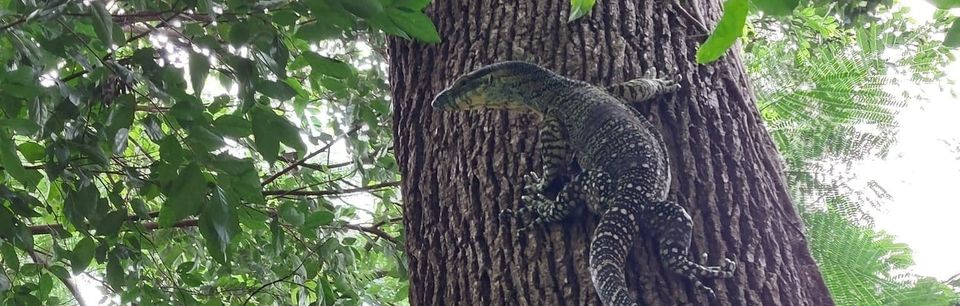
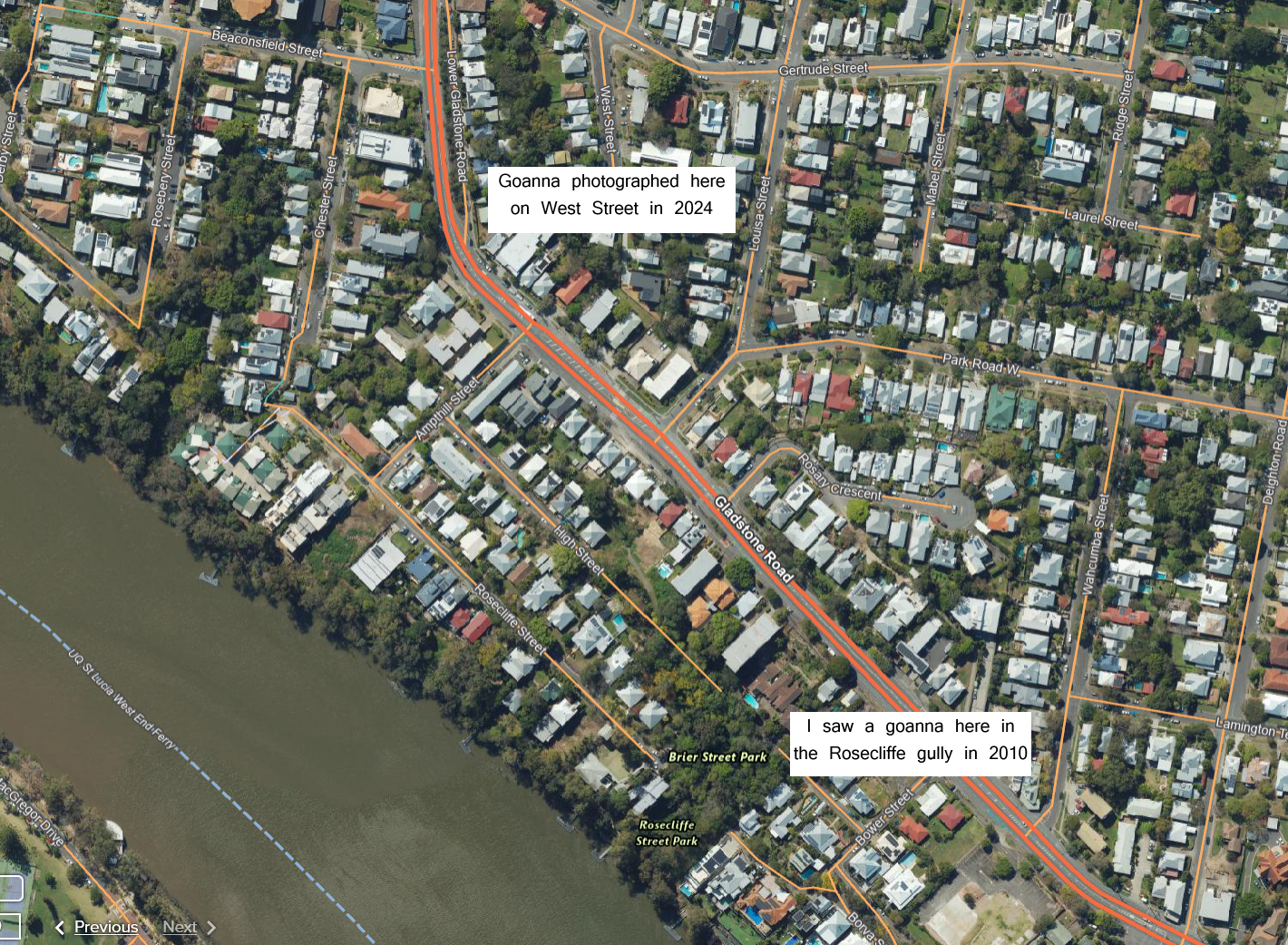
Fifteen years ago, while visiting a friend in Highgate Hill, I found myself on the old pedestrian bridge that cuts across Rosecliffe Street Gully, and spotted something I'd never expected to encounter in the inner-city.
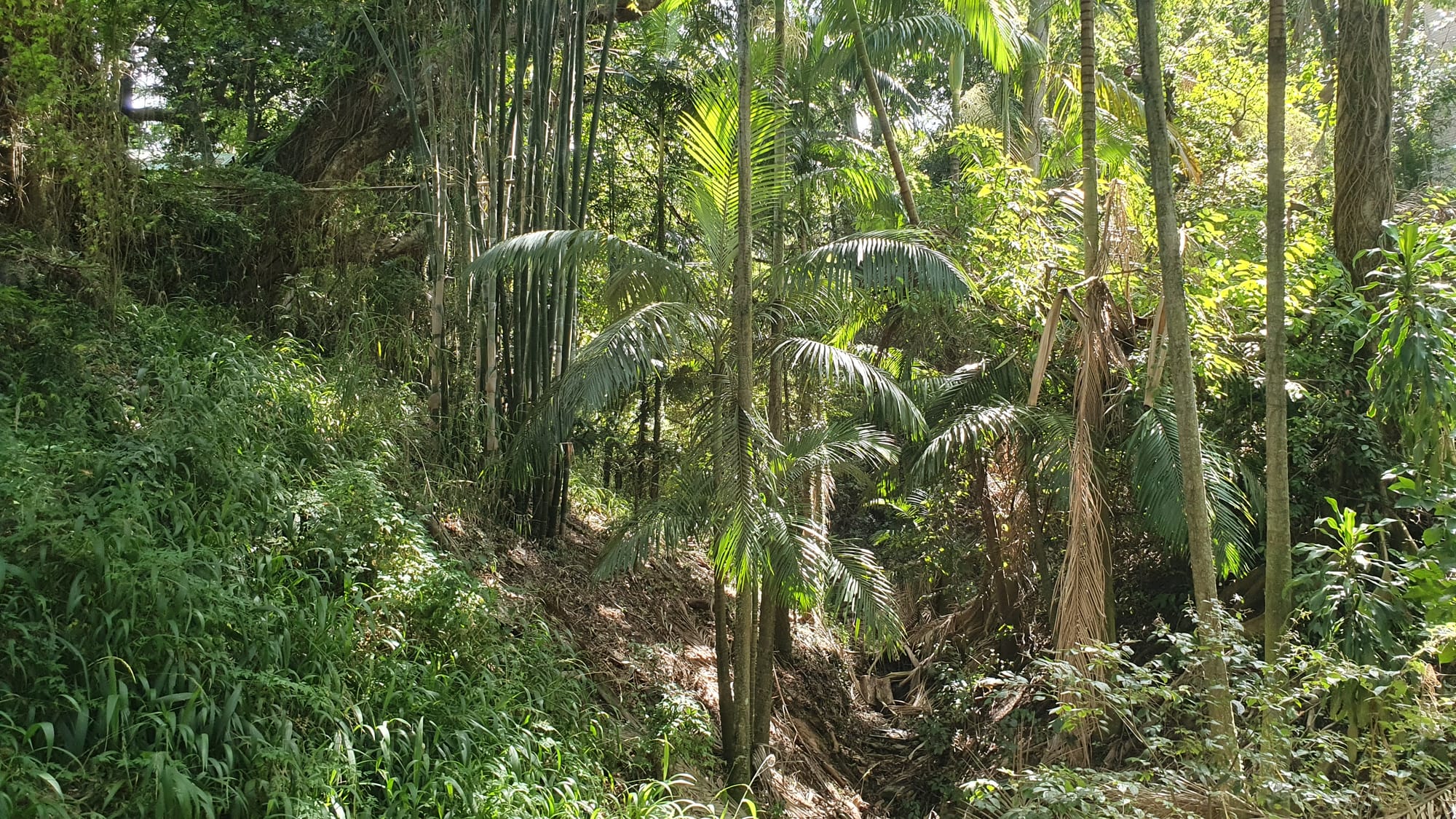
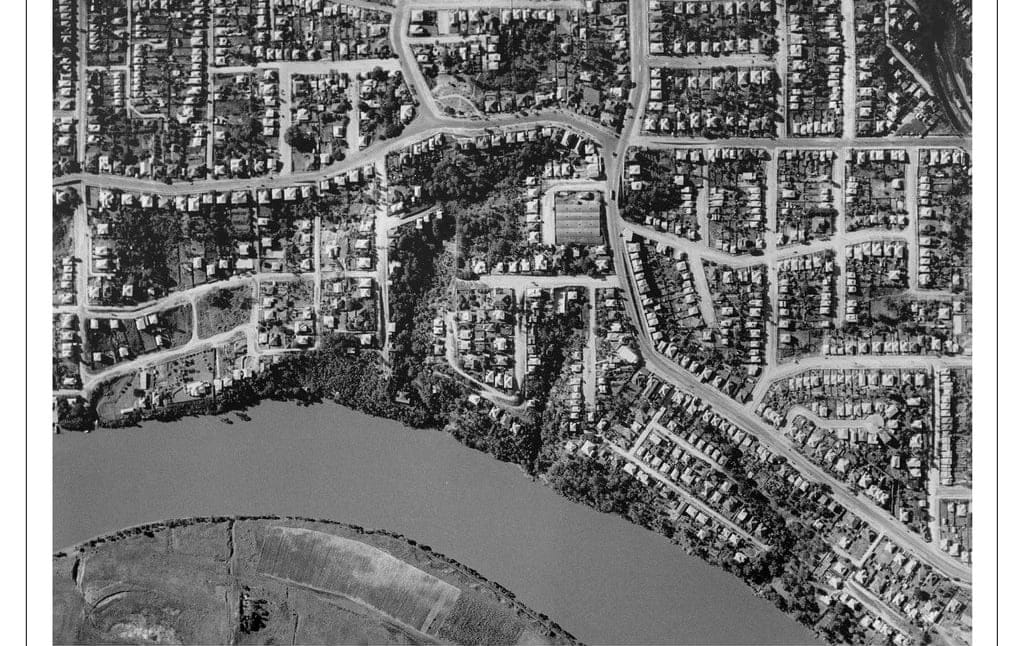
This little forested gully, on the back side of Beenung-Urrung, feels a long way from the city, even though it's only 1.5km from South Bank train station. Its steep slopes have never been completely cleared of vegetation, and despite the presence of many invasive plants, the gully remains a slightly-surreal reminder of the thick jungle that dominated much of the area before the British invasion.
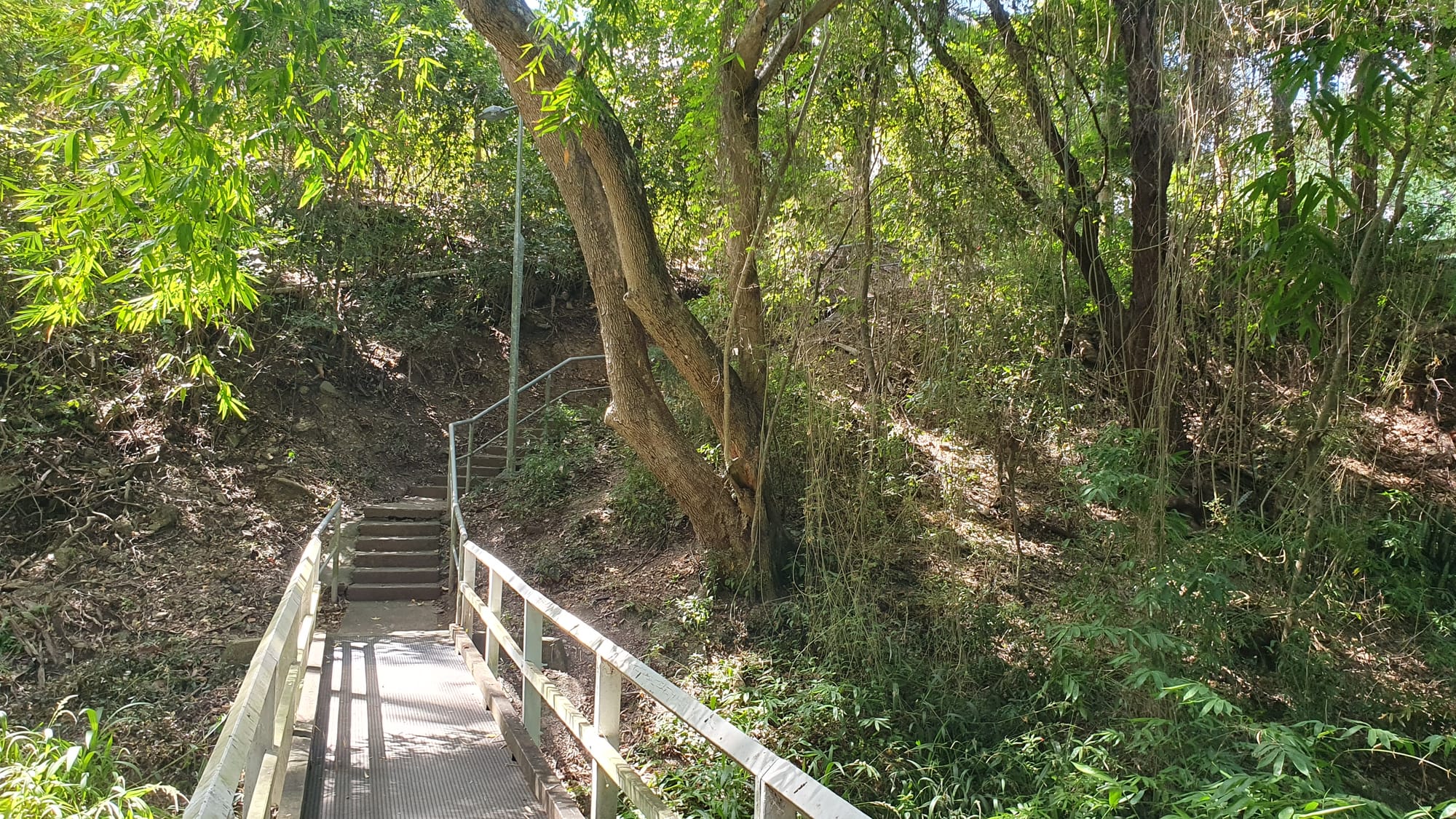
As you climb down the slimy old steps to the footbridge that connects Rosecliffe St to High St, the houses and units on both sides of the gully are completely obscured by trees. Here and there, beams of sunlight penetrate the dense, shady canopy to bounce off long snaking vines and thick carpets of moss.
In the middle of a rapidly-growing metropolis, these tangled, feral, forgotten green spaces have an otherworldly, almost magical quality.
So that afternoon on the bridge, it felt both surprising and perfectly normal when I saw a live goanna clinging motionless to the trunk of a large tree.
The lizard was a few metres above me and at least 10 metres from the bridge, so I can't say I got a really good look at it in the dim light, but I feel certain it was a goanna – a lace monitor – and not a smaller eastern water dragon (which are common in many vegetated areas of the 4101 postcode).
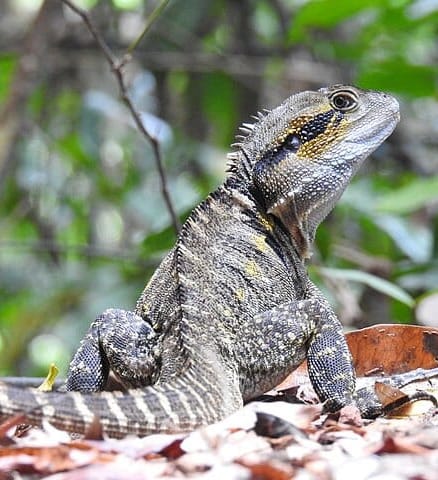
Lace monitors (left) grow much bigger than eatern water dragons (right) which are common in inner-Brisbane (Image credits: Shillings1005 and Edward Bell)
I returned repeatedly to the Rosecliffe gully over the years, but never saw the monitor again. And no-one else I spoke to about it had ever seen a goanna in Highgate Hill. Even an immediate neighbour of the gully who walks her dog across the bridge daily says she's never seen one there.
Lace monitors typically have quite large ranges. Even in an area with abundant, varied food sources, an individual goanna would ordinarily roam across a territory of a couple dozen hectares at least (but ranges can be much smaller around National Park campgrounds for example).
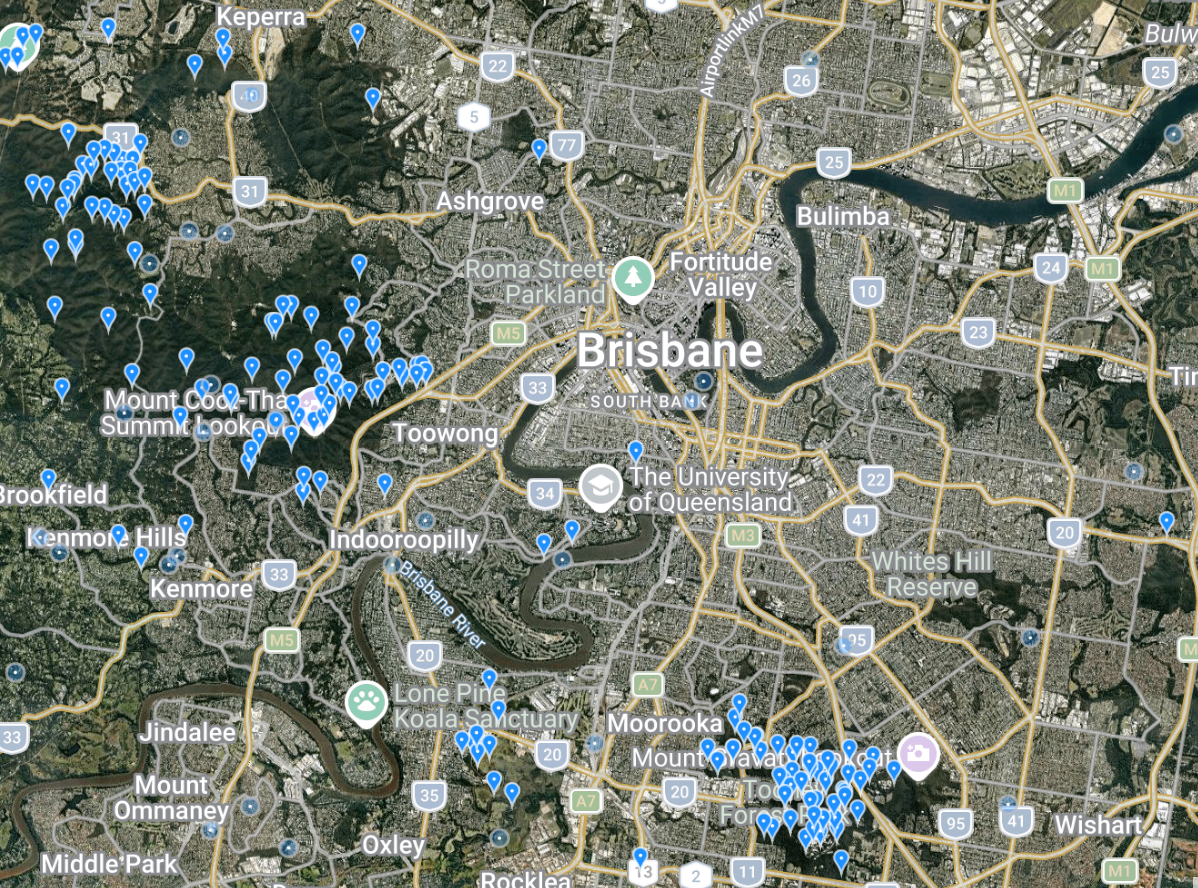
The nearest known goanna populations on the south side of the river are 6km away in Toohey Forest. It's hard to imagine a lace monitor travelling safely from southern Tarragindi to Highgate Hill on a regular basis without falling foul of cars or dogs.
So a lot of people understandably scoff at the idea that a reptile as big as a lace monitor could survive in a very small remnant patch of jungle in Highgate Hill, surrounded by busy roads and effectively cut off from larger bushland reserves.
Is it really so crazy to think a goanna might still be living around this gully without anyone noticing?
Over the years, I'd begun to wonder if I'd imagined it, or had just misidentified a really large water dragon.
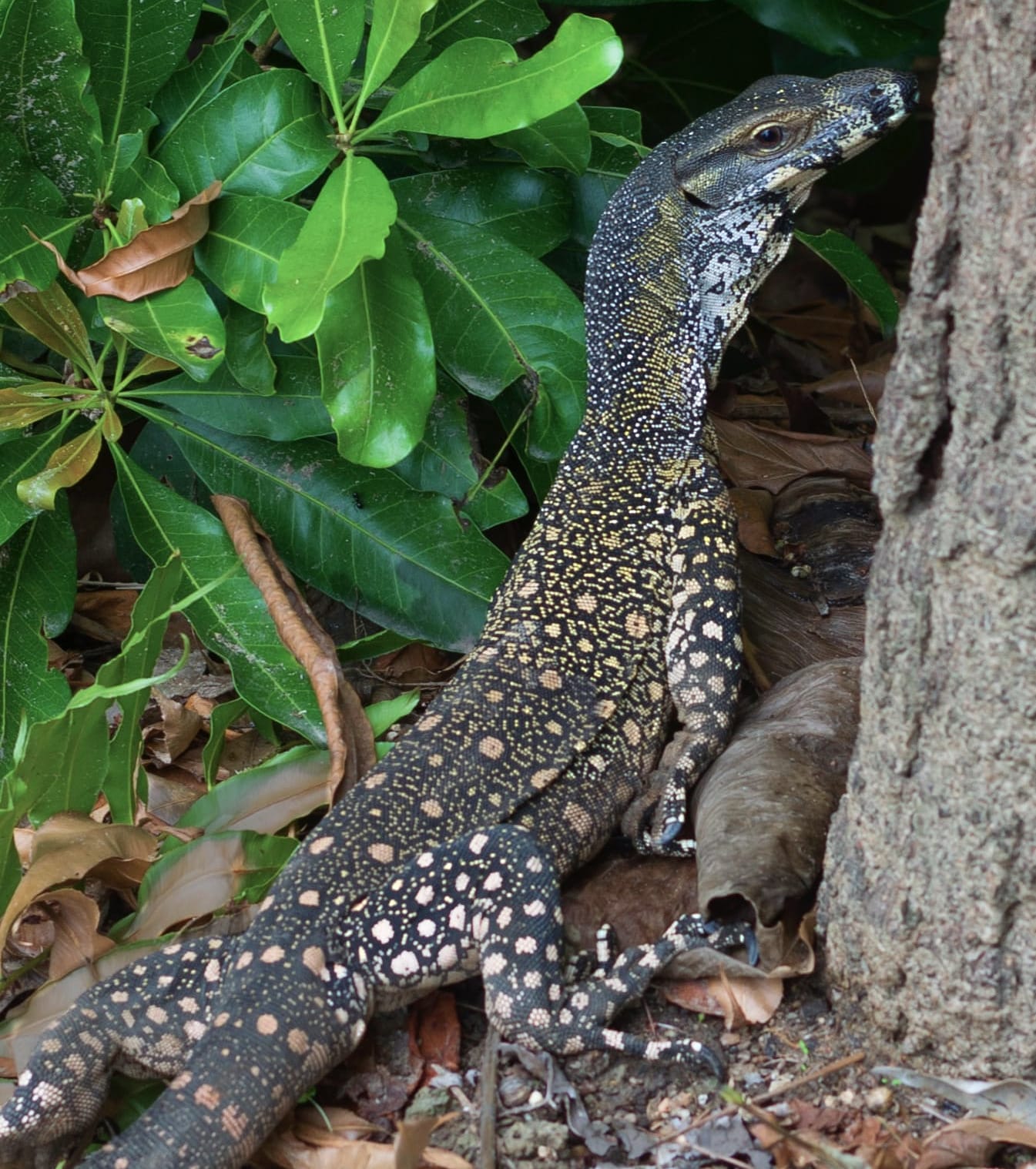
But in January 2024, a resident on West Street in Highgate Hill – 500m north of the Rosecliffe gully, on the other side of busy Gladstone Road – photographed this goanna scrambling up a tree in their yard.
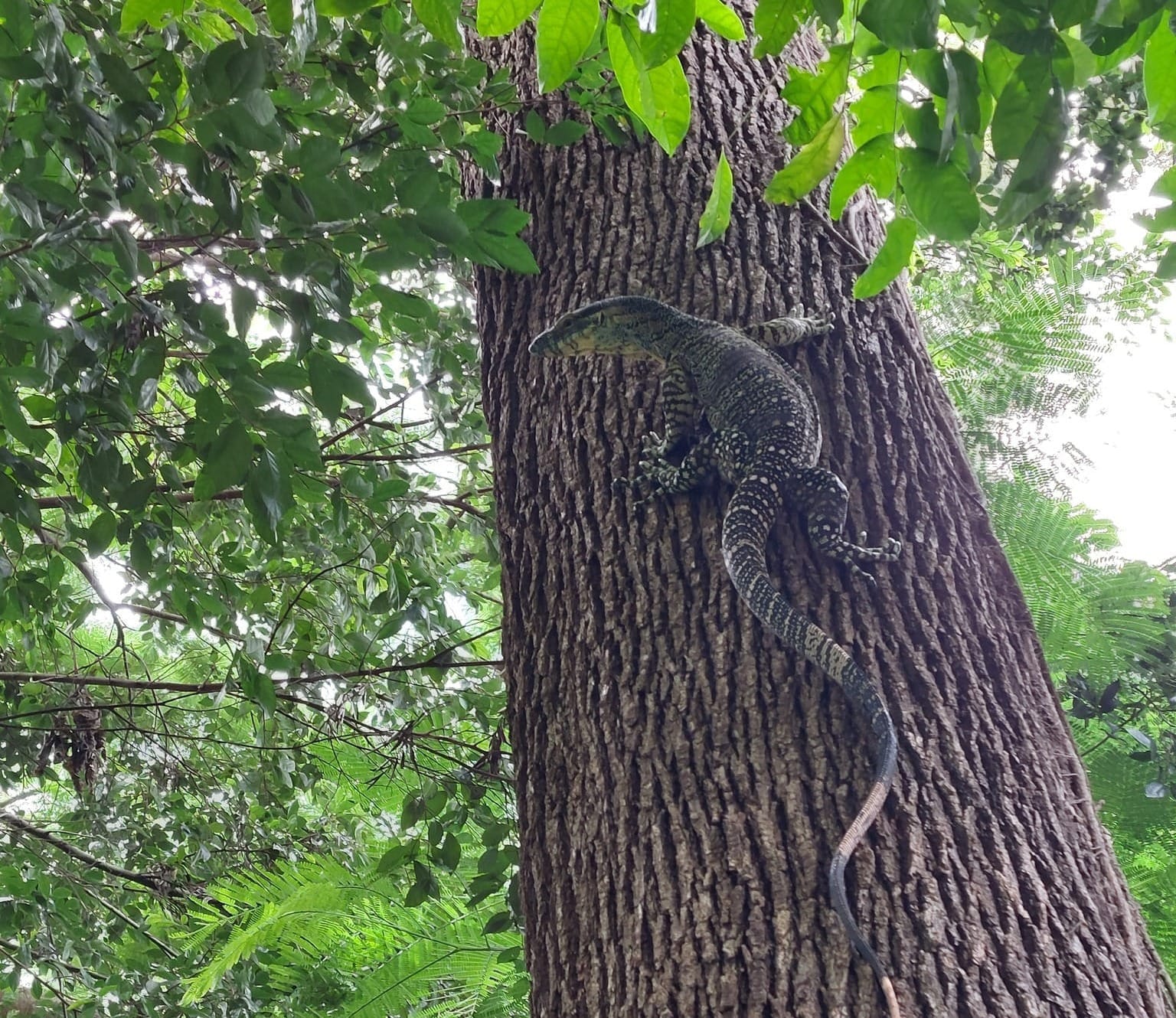
That's right – we have a recent, confirmed sighting of a decent-sized goanna in a Highgate Hill backyard, about 400 metres north of the Rosecliffe gully.
If you look at West Street on a map, you'll see what an odd location it is to find a lace monitor in. But you can also see how an intrepid goanna might follow the vegetated corridor leading through backyards down towards Park Road West, and cross Gladstone Road to reach the top of the Rosecliffe St gully.
While some online sources suggest wild goannas have an average lifespan of 10 to 15 years, lace monitors have been reported to live up to 40 years in captivity. It's possible that this 2024 sighting was actually the same individual I saw 15 years earlier, which would be pretty cool.
Goannas have a broad diet, which includes eggs, small reptiles, mammals, birds, insects and scavenged carrion. If a monitor could find suitable nesting spots, and avoid major threats like cars and big dogs, it could probably find enough food in the gullies and yards of Highgate Hill (heck, a goanna could survive exclusively off roadkill possums on Gladstone Road and Dornoch Terrace).
We have several possibilities to consider...
A) the goanna spotted in West Street was an escaped pet, or had intentionally been trapped in a bushland reserve and relocated to the city (seems very unlikely)
B) goannas are ranging between Highgate Hill and existing habitat areas much further south like Toohey Forest, despite the distance and geographical barriers
C) this goanna happened to be washed down the river in a heavy storm from an upstream riverside territory such as Oxley Creek, and got a little lost in inner-city backyards while trying to find its way back home (goannas definitely do get washed downriver in major floods)
D) a lone, completely isolated goanna has survived in the southern end of Highgate Hill for decades, scurrying between the tangled riverside gullies on the western side of Gladstone Road, and leafy private backyards that are increasingly being cleared to make way for boomer-tomb mcmansion renovations
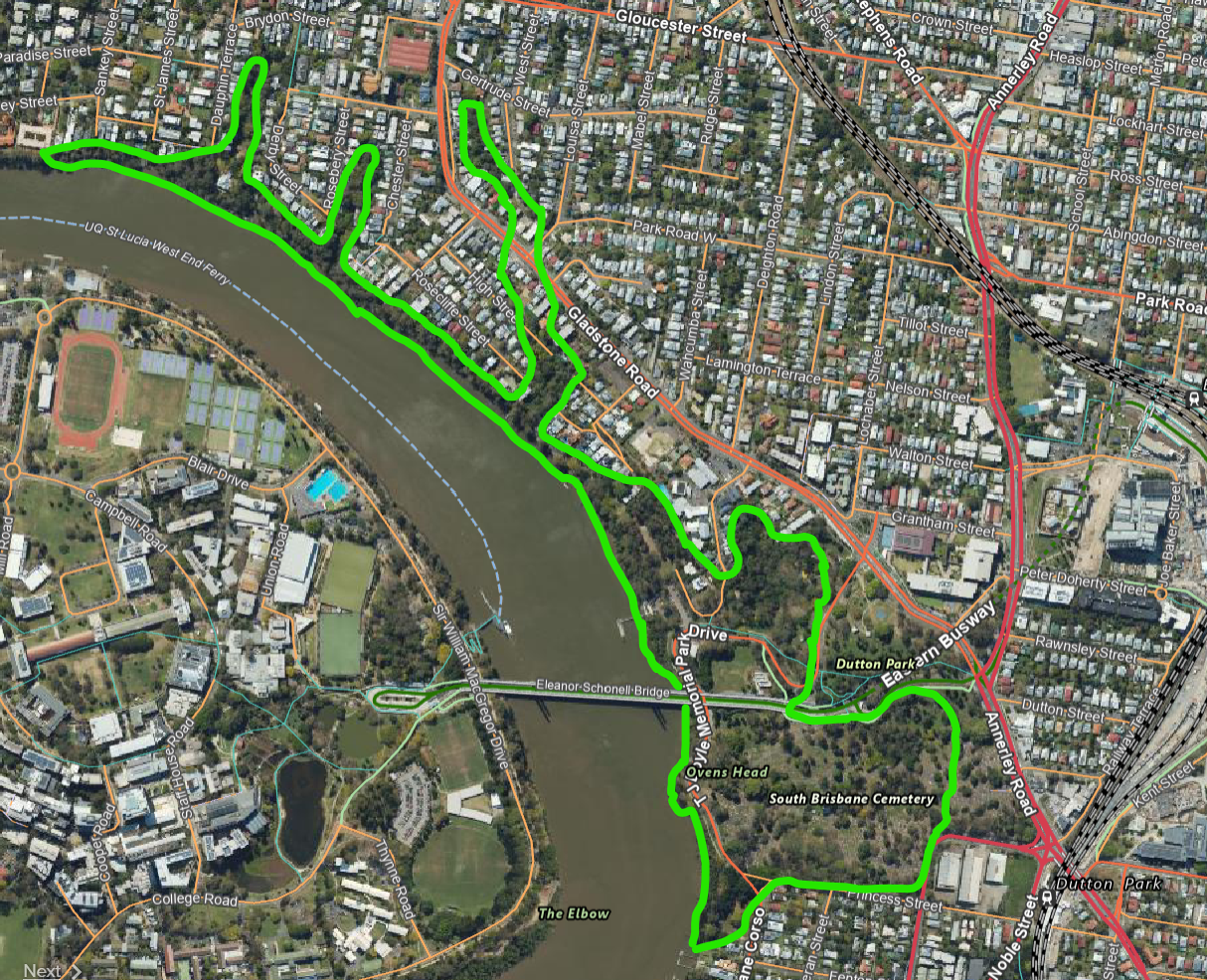
E) the Highgate Hill goanna has a slightly larger territory, following the intertidal zone along the river's edge, which connects it to other heavily vegetated green spaces in Dutton Park and the South Brisbane Cemetery without having to cross too many busy roads
Personally, I think E is most likely. The sandy intertidal zone along the river's edge is an unbroken wildlife corridor used by a range of species, and isn't easily observed from the back decks of the houses along the ridge tops. So a secretive goanna – or a mother-daughter lineage of goannas – could be moving between Dutton Park, the river's mangrove fringe, and the gullies of Highgate Hill, very occasionally venturing up the ridge and across Gladstone Road.
Several established trees at the northern end of the Rosecliffe Gully were cut down in late 2023. Could this have displaced a goanna across Gladstone Road to where it was spotted in West Street?
Interestingly, goannas are parthenogenetic – meaning females can lay viable eggs without fertilisation from a male. So it's possible a female lace monitor that was living in Highgate Hill in the mid-1900s could have bred successfully (even after her territory was cut off from potential mates by post-WWII development and habitat fragmentation), with multiple generations of local female goannas surviving into the 21st century.
One element I find strange about this – and which is also why a B scenario (where an urban goanna moves across a much larger range from Highgate Hill to Toohey Forest) seems even less likely than E – is that there has only been one publicly reported sighting in all these years.
Other large reptiles like carpet pythons are regularly spotted throughout suburbs like Dutton Park, Highgate Hill and Annerley, with photos posted on social media groups and on citizen science platforms like iNaturalist. Brisbane's south side is full of eager, observant wildlife lovers who diligently document everything from moths to skinks to beetles; if one or more lace monitors were regularly moving through the suburbs, including crossing busy roads, wouldn't more people have seen something?
I don't pretend to know exactly what's going on here. But now that I know I'm not the only person who has seen a goanna in Highgate Hill, I'd love to find out if anyone else has encountered it.
So this article is really just a callout for information to help me solve this little local mystery... Have you ever seen a goanna in the backstreets or gullies of Highgate Hill?
If so, please email me at office@jonathansri.com or post up in the comments. And please also log any photos via the non-profit iNaturalist platform.
Why does this even matter?
Lace monitors are still reasonably common in South-East Queensland bushland reserves further away from the city centre. But relentless suburban sprawl is fragmenting these populations, creating a real risk of genetic bottlenecks due to inbreeding (they're already classified as an endangered species in Victoria).
If, however, enough densely-vegetated green space is preserved within suburban landscapes for lace monitors to move around safely, their future might be a little brighter.
The persistence of one or more goannas in an inner-city suburb like Highgate Hill feels important to me because even a lot of progressive residents and policymakers no longer consider urban green spaces (whether private yards or public parks) as being conservation-worthy native habitat areas, and primarily focus on designing and managing them to best serve human recreation needs. But what if we recognised that networks of vegetated parks and private yards can support a more diverse range of species – including larger animals like 2 metre-long goannas? This strengthens the case for letting the grass grow long and planting denser understorey vegetation (not just scattered trees and manicured lawns), as well as being more thoughtful about factors like light pollution, rodent poison use, and of course car speed limits.
This old water dragon wasn't spilling any secrets about local goannas
For city-dwellers, 'connection to nature' shouldn't just be about trees or water views alone. As George Monbiot writes in Feral, we stand to lose more than we realise if we fail to make room for wild animals...
"It creates a dull world, a flat world, a world lacking in colour and variety, which enhances ecological boredom, narrows the scope of our lives, limits the range of our engagement with nature, pushes us towards a monoculture of the spirit.”
Encounters with wild animals – especially something as impressive as a large goanna – help remind us how big and beautiful the world is, and snap us out of the monotonous consumerist complacency that urban life keeps force-feeding us.
Brisbane's biodiversity is what makes it special, and sets it apart from so many other cities around the world. At a time when we're losing so much to thoughtless, profit-driven development, the idea that a wily goanna can surreptitiously eke out an existence in the inner-city, sneaking unnoticed past the gentrifiers' motion-sensor security cameras, is pretty damn cool.
If nothing else, it would help keep those bush turkey numbers in check.

Addendum (23/4/26)
Since publishing this article on Monday, I've had responses from several other residents confirming goanna sightings in Highgate Hill in the past few years, including in backyards on Rosecliffe St and Gladstone Rd near the gully, as well Colville St on the northern side of Dornoch Terrace, and even crossing Stephens Rd near Somerville House. Residents also reported finding one over on Sussex St, West End in 2016 (that individual was apparently relocated by wildlife carers to Mt Coot-tha).
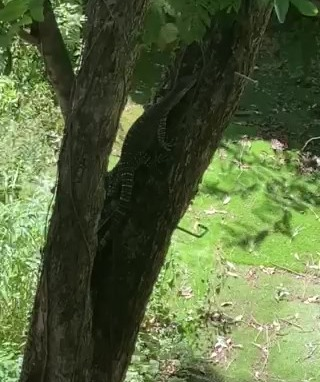
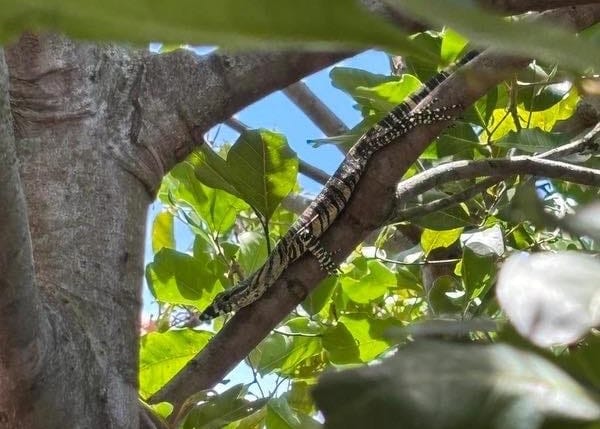
First image taken by Evan Hives in February 2024 shows a goanna in a backyard off Gladstone Road; second image taken by Tyra Rose in January 2026 on Colville St shows what appears to be a smaller, younger goanna than the one photographed on West Street and Gladstone Rd in 2024
I feel more confident now in concluding that one or more goannas are still living locally around Highgate Hill, which is pretty wonderful, and makes protecting established trees and vegetated wildlife corridors within the 4101 postcode feel even more important.
It's noteworthy that while goannas are evidently still living around Beenung-Urrung's gullies, even some of the long-term immediate neighbours I spoke to on Rosecliffe St and High St who regularly walk through these spaces had never seen one. This reminds us that many animals are extremely secretive and easy to miss if we're not looking for them, and that we often underestimate just how ecologically abundant how city still is... for now at least...
Thanks heaps for reading! Unfortunately, relatively few people are writing about or paying much attention to inner-Brisbane's urban ecology and how it's impacted by development and gentrification. To support me to write more articles like this, please sign up for a subscription to my monthly newsletter...
 Jonathan Sriranganathan
 Jonathan Sriranganathan
.jpg?ref=jonathansri.com)

Member discussion