Queensland Greens vs the new Queensland Socialists: How different are they?

Around 2017, ideological and strategic divergences between Greens parties in different states were becoming more noticeable...
The QLD Greens were aligning more closely with the NSW Greens, with a stronger critique of neoliberalism, and a greater emphasis on housing justice, wealth redistribution and public ownership of essential services.
Meanwhile southern Greens parties were looking more centrist and reformist, watering down their political rhetoric and policy demands for fear of being branded 'extreme.' Victorian Greens senator and federal party room leader Richard Di Natale embodied this strand of Greens centrism with his close-minded response to the emergence of youth-led proto-faction Left Renewal.
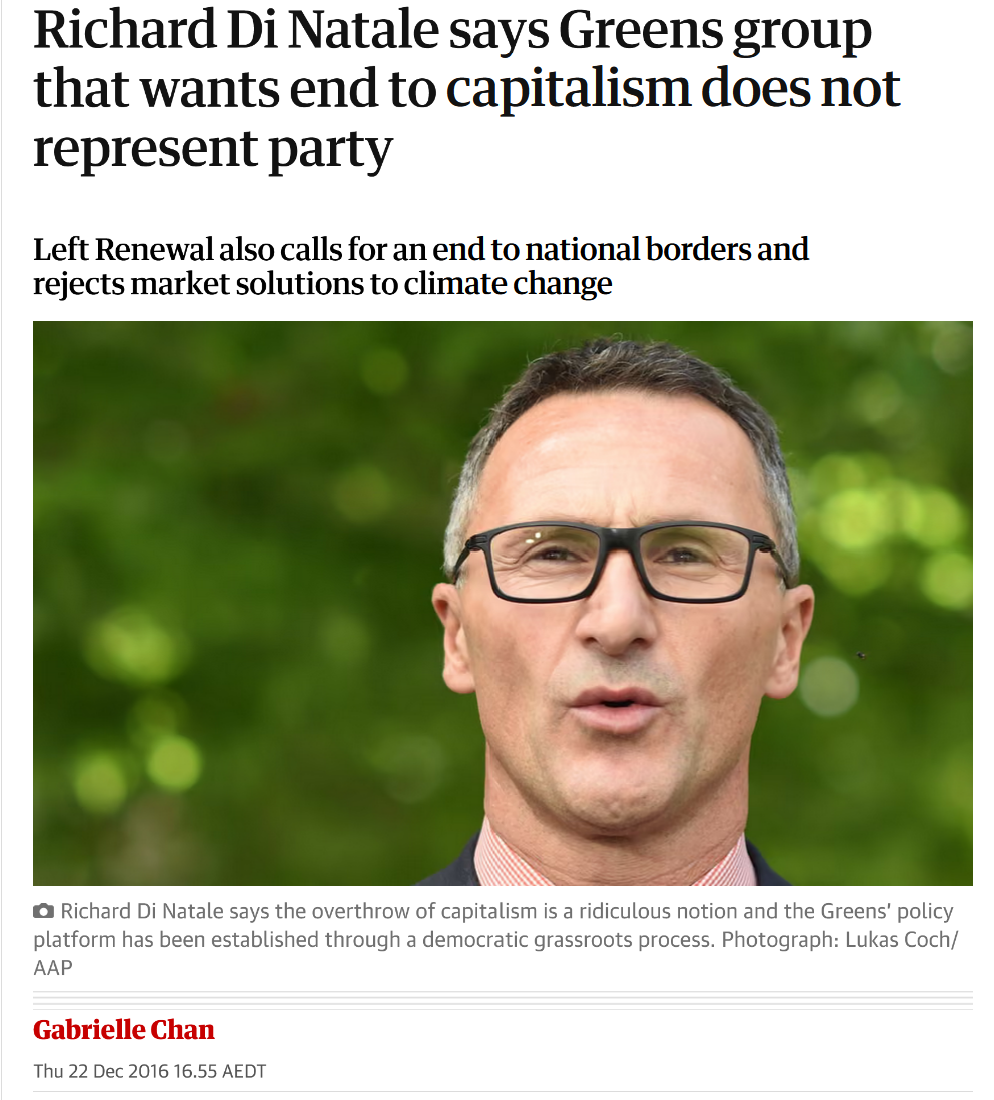
This was the political context in which the Victorian Socialists emerged, forming through cooperation between Socialist Alternative, Socialist Alliance and various other independent socialists (Socialist Alliance later pulled out in 2020).
I was excited to see the new party form and build momentum in 2018; I hoped it would pull the Victorian Greens further to the left.
After Adam Bandt became the federal leader in 2020, he more clearly positioned the Greens as a left-wing social democratic party, and the Victorian Greens membership preselected Lidia Thorpe (ahead of human rights lawyer and millionaire property investor Julian Burnside) to replace the retiring Richard Di Natale. But the Greens continue to be characterised by an ideologically diverse supporter base, particularly in terms of how openly the movement talks about capitalism and systemic change.
In Queensland in 2018, there was less momentum for an overtly socialist party paralleling the Victorian Socialists. The sorts of young, anti-capitalist activists who might have started such a push were instead winning influential leadership roles within the Queensland Greens. Several of Brisbane's most active Socialist Alliance members even quit that group to become enthusiastic Greens campaigners.
To register a political party to contest Queensland elections, you need at least 500 members. While Socialist Alliance runs federally, it has never been able to muster the required 500 Queensland-based members to achieve state registration.
But now in 2026, the Victorian Socialists are taking their brand nationwide. A new party, the Queensland Socialists, are on the cusp of formal registration, claiming up to 800 interested members. Socialist Alliance isn't involved, leaving Socialist Alternative as the dominant and driving force behind Queensland Socialists.
So I thought it was timely to chat to Liam Parry, a member of Socialist Alternative, a spokesperson for the Queensland Socialists and their candidate for the Stafford by-election (you can watch or listen to my full interview with Liam via the embedded players at the bottom of this article).

Liam will actually appear on the by-election ballot as an independent because the party's registration hasn't been finalised, but they're confident of reaching the 500-member threshold when the Electoral Commission completes its checks.
(For those who are interested, the Greens have put forward local teacher, unionist and solid Palestine ally Jess Lane as their candidate for Stafford.)
I have to acknowledge up-front that my scepticism towards Socialist Alternative could be colouring my analysis of the Queensland Socialists. But I'm trying to look past that and see the positive potential of this new party.
 Jonathan Sriranganathan
As a Greens member who generally feels the Queensland Greens are nowhere near bold or radical enough in terms of policy, rhetoric or broader strategy, I'm primarily interested in three overarching questions:
Are there fundamental differences between the strategy/approach of Queensland Socialists and Queensland Greens that mean the Socialists will have a more significant positive impact?
Will the emergence of the Queensland Socialists help push the Greens to adopt a bolder strategy or political orientation?
Is there anything significant in the new party's DNA that will insulate them from establishment pressure towards liberal reformism and co-option?
Meeting voters where they're at vs broadening the parameters of debate
The policies and initiatives candidates lead with at election time understandably attract the most public attention. Although a party may have many other policy positions buried on obscure webpages, it's the ones that make it into social media posts, printed campaign materials, media coverage and speeches that signal a party's priorities and have the biggest potential impact on the broader political landscape.
But most voters don't make their mind up based on details of specific policies – they vote based on a broader impression of the party's image, values and goals (which policies can help illustrate). The vision and overarching political critique definitely matters.
In our interview, Liam tells me, “We want to be starting a conversation in Queensland and around Australia that capitalism as a social system that puts profit ahead of human life is fundamentally wrong and we want to build a total alternative rather than negotiating within it.”
When I ask him whether there are any Queensland Greens positions or policies that he disagrees with, the only one he points to is the party not taking a strong enough anti-Olympics stance (which I've also criticised).
Addendum 5/5/26: Liam has asked me to highlight that he and his party also disagree with several recent Australian Greens party room positions, including the decisions to vote for Labor's Housing Australia Future Fund, Climate Safeguards and Environmental Protection Authority bills, as well as a federal Greens election initiative about domestic drone manufacturing (please do also listen to our full discussion via the players at the bottom of this page if you have time).
For the purposes of this article, I was more interested in the state election platforms and distinctions between the two Queensland-based parties, but Liam is right to remind us that federal Greens reps from Queensland also supported the above problematic federal positions, and weren't censured or publicly criticised by the Queensland party in any way.
I won't over-analyse Liam's printed campaign materials for the Stafford by-election. I can imagine how rushed things must be for a party that has barely formed to get their comms together for a snap campaign, and I expect their messaging will get more sophisticated over time. But I think it's cool they're emphasising the idea of making politicians take a pay cut (which was also something I talked about in my councillor campaigns).
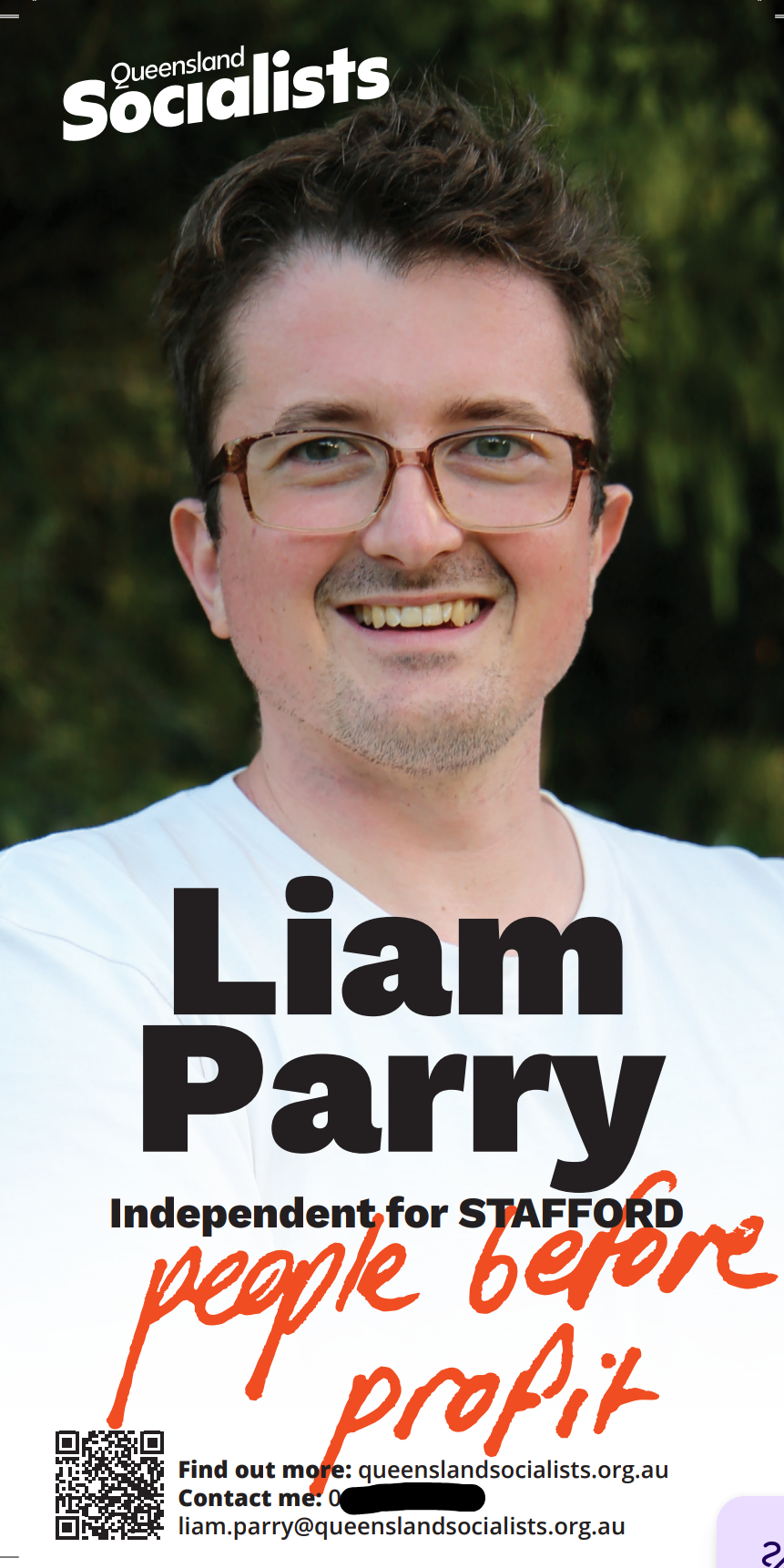

Complaining about politician salaries can sometimes distract from bigger systemic issues, but calling to tie them to those of teachers or nurses taps effectively into anti-establishment sentiment. It's certainly more progressive than the Greens, who only require their politicians to donate 10% of their salary to the movement, and generally haven't had much else to say about politicians' salaries (some Greens elected reps like myself and Max Chandler-Mather did voluntarily donate much more of our income to non-profit projects, but this was the exception rather than the norm).
Every other position on Liam's flyer aligns with Queensland Greens policies and goals. They're also using the same core campaign tactics – doorknocking, letterboxing flyers, and the occasional forum.
Addendum 2/6/26: I only realised today that actually the Queensland Greens Democracy policy actually does also call for MPs' salaries to be linked to the median wage for Queensland. This makes me wonder why the party doesn't campaign harder on this point during elections.
Looking further afield at the headline policies Victorian Socialists have focussed on in successive state elections, they don't actually seem dramatically different from the Queensland Greens. Both parties have campaigned for rent freezes and more public housing construction, free public transport, strong carbon emissions reductions, more funding for health and education, and a state-owned public bank.
When you dive deeper, the Victorian Socialists go further in some policy areas. For example, they've stated they want to "Cap at two the number of homes that any individual can own" and "Bring into public ownership properties that have been vacant for more than two years without extenuating circumstances." But because these bolder demands mostly aren't mentioned in campaign materials, interviews and social media assets, they're largely irrelevant unless/until the Socialists win enough seats to make concrete demands of governing parties.
In the 2025 federal election, you could've swapped the names and branding on the two parties' flyers and few people would've been able to tell the difference.
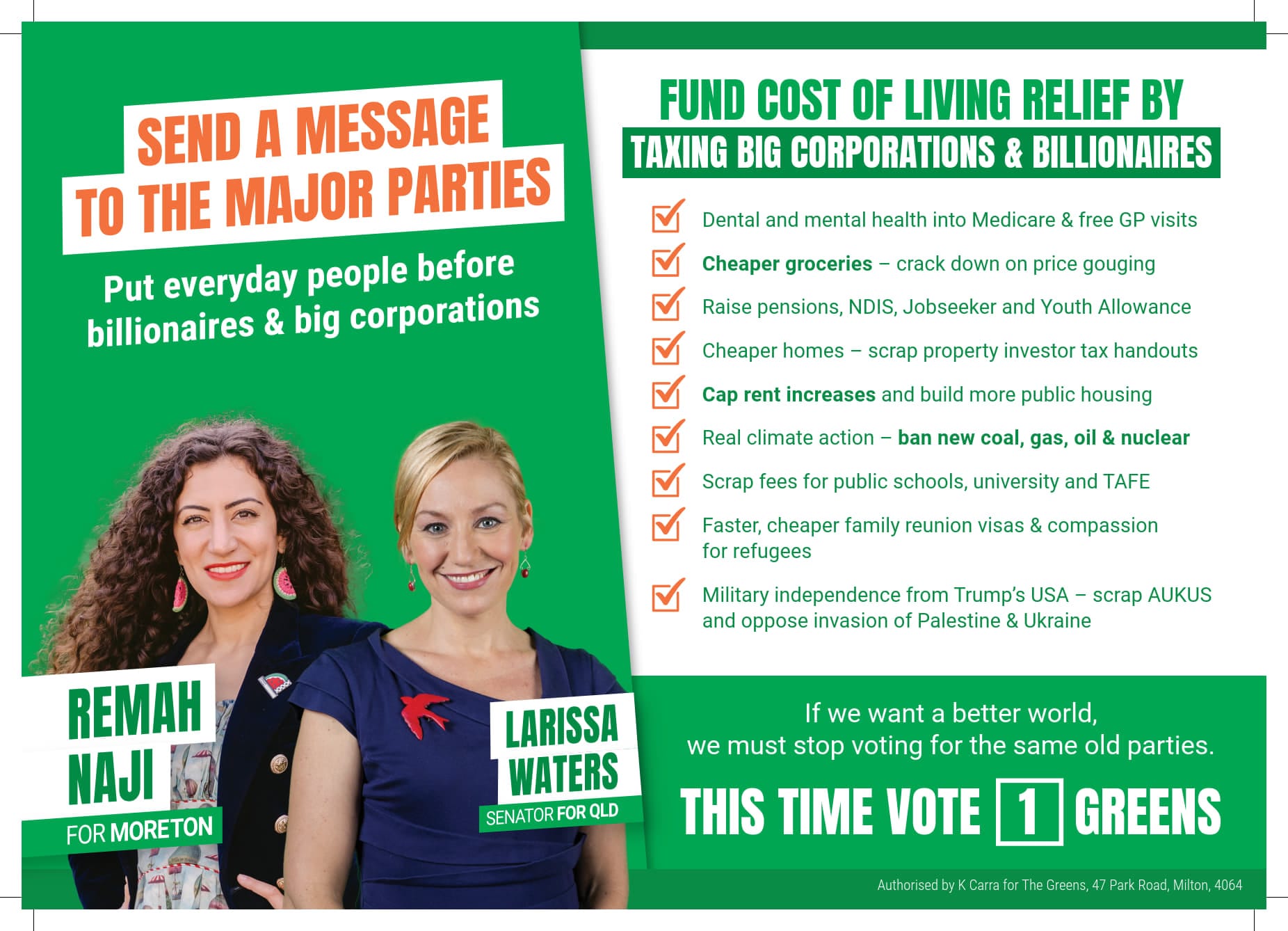
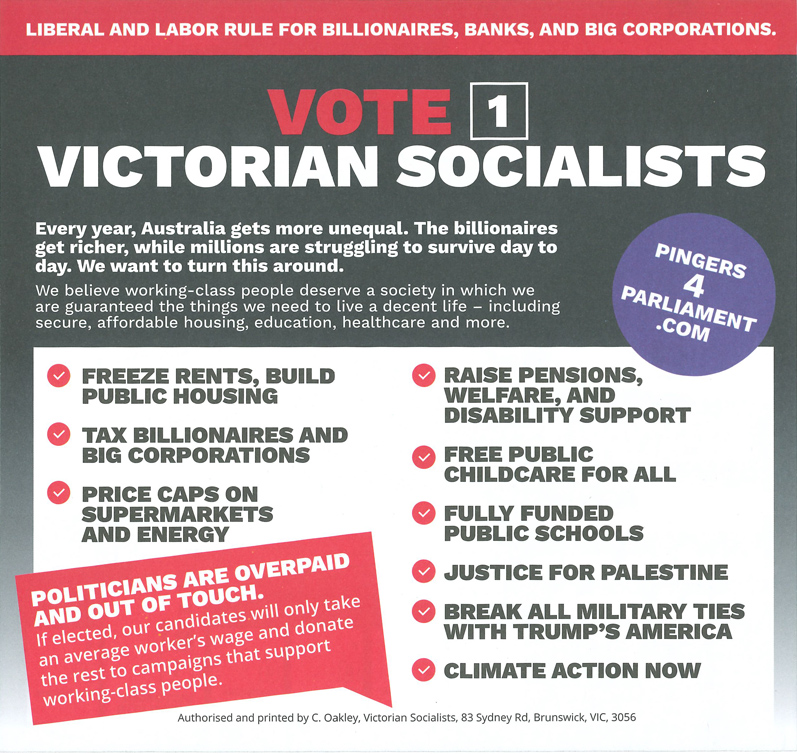
The messaging on Greens and Socialists How-to-Vote materials in the 2025 federal election was very similar
Thinking through my conversation with Liam and looking at Victorian Socialists campaign materials, I'm struck by how the policy demands the Socialists highlight during elections are much more moderate and reformist than their stated long-term goals.
The campaign platforms look more like social democracy than revolutionary socialism.
Calling for a rent freeze presumes the continued existence of landlords who charge rent (even though their ultimate goal is a world without for-profit landlords). And proposing to establish a state-owned bank falls short of abolishing or nationalising all private for-profit banks.
Basically the new Socialist parties seem to be taking a similar approach to the Greens: call for policies which can be implemented now without major systemic change, and which are calculated to appeal to swing voters who might not yet have an appetite for more radical transformation.
Liam acknowledges this, saying via email "I think we do want to raise demands for things that could be delivered now, which connect with people while also trying to push politics to the left and making an argument to people who are more on the fence."
This is a rational electoral strategy. If a minor party isn't winning over more voters (and ideally threatening to take seats off larger parties), its impact on wider political discourse and outcomes will be negligible.
But it makes any Queensland Socialist critique that the Queensland Greens are 'too reformist' seem less credible given that their headline policies are so similar, and both parties are making similar compromises in crafting platforms that meet voters where they're at.
A clearer vision and direction?
Messaging-wise, the main distinction between the Queensland Greens and Queensland Socialists isn't in the policy platforms. It's that the Socialists are more explicit about their ideological critique and long-term vision.
“I suppose for us a difference would be that we want to be explicitly anticapitalist and foreground that in the way we talk about what needs to happen," Liam says.
His campaign flyer includes the phrase "Capitalism is screwing the working class, migrants, students and the poor."
Liam emphasises that the Queensland Socialists see contesting elections as just one element of the struggle, and recognise systemic change won't come through the ballot box alone.
“For the socialists our starting point would be that we want to use parliament as a way to call out the capitalist system and encourage people to get more active in every sphere of society and not just see these things as being solved through parliament.”
But that notion isn't actually so different from the Greens. Section 3.3 of the Queensland Greens' constitution begins:
"Our view of social change involves more than merely the substitution of one lot of decision makers with another lot who will act more responsibly.
We aim for changes that will empower all people and allow them to act in greater harmony with each other and the rest of nature. Therefore, while contesting elections is an important part of our strategy it is by no means the only one. We will also be involved in grassroots campaigns which are essential if destructive and undemocratic values in the community are going to be seriously challenged by our movement. ... "
Many Greens members are indeed very active in various social movements and community projects, but this work mostly doesn't happen under the party's brand (unless it's organised by a particular election campaign team or MP's office). It'll be interesting to see whether, as the Queensland Socialists grow, their non-electioneering work occurs through unions and groups like Socialist Alternative, or as party-controlled initiatives.

While the Greens share the Socialists' insistence that electioneering isn't the be-all and end-all, they've always been vaguer about exactly what kind of system and society they're aiming for.
The party's federal charter (also adopted in the Queensland Greens constitution) clearly implies pretty substantial systemic change, with phrases like "We aim to transform the political, social and economic structures that oppress people and to develop a rich, participatory cultural life that enables the flourishing of a new democratic movement for progressive change." But it doesn't mention the words 'capitalism' or 'socialism.'
Personally I don't mind the Greens being more agnostic and open-ended about the long-term destination than the Socialists are. 'Socialism' has multiple competing strains and definitions; hitching your wagon to such a heavily-laden ideological label can be a turn-off for some potential supporters.
A lot of people are, like me, rightly critical of centralised government and top-down bureaucracy, and thus wary of political projects which seem like they just want to nationalise everything, even if that's only a transitionary step towards decentralisation and local democracy (I've previously been critical of the Greens for not appreciating this).
But I still think Greens messaging should be more explicitly anti-capitalist, and offer supporters a clearer diagnosis of exactly why the system is failing.
Jonathan Sriranganathan
The Greens' relative ideological open-endedness means it draws in supporters with a broader range of political inclinations. This has been both a strength and a handbrake.
I can't help but envy Queensland Socialist members who will likely never have to sit through exasperating housing policy workshops where you have to spend hours convincing conservative party members why landlords shouldn't exist. But I also appreciate that the Greens serves as a space for political education where less radical members can come on a journey towards a more robust critique of the status quo.
Ultimately though, I think we need to be cautious about placing too much emphasis on what a party says its governing ideology and long-term vision is, and pay much more attention to how it purports to wield power and guard against co-option.
Remember, Queensland is on paper already home to one very large and long-running socialist party... Let's read from the 'Objectives and Principles' section of the ALP's constitution (my emphasis added in bold):
"The Australian Labor Party had its origins in:
(a) the aspirations of the Australian people for a decent, secure, dignified and constructive way of life;
(b) the recognition by the trade union movement of the necessity for a political voice to take forward the struggle of the working class against the excesses, injustices and inequalities of capitalism; and
(c) the commitment by the Australian people to the creation of an independent, free and enlightened Australia.
The Australian Labor Party is a democratic socialist party and has the objective of the democratic socialisation of industry, production, distribution and exchange, to the extent necessary to eliminate exploitation and other anti-social features in these fields."
The co-option and degeneration of the Labor party reminds us that it's all well and good to say your goal is system change, but if you're chasing votes and influence within a capitalist system, you need to have some damn good answers as to how you'll ensure your MPs and senior staffers won't be corrupted or disciplined by the pursuit of power.
Are the Queensland Socialists structurally resistant to co-option and centrist drift?
History offers numerous examples from around the world of left-wing parties that start with radical and even revolutionary aims, but gradually sell out or roll over under establishment pressure.
The most familiar pattern sees rank-and-file party members losing control over their own MPs, while a smaller layer of senior staffers and/or volunteer office-bearers (time-rich members whose privilege enables them to attend endless meetings and take on influential unpaid committee positions) become the proxy for the wider movement.
Those kinds of people are often so busy with internal party machinations that they're increasingly disconnected from grassroots activism on the streets. Consequently, both the MPs and the non-parliamentary power-brokers become more susceptible to centrist/liberal rhetoric and arguments for incremental reformism, leading to compromises and capitulations that uphold the status quo rather than transforming it.
They inevitably fold when faced with direct corporate sector threats such as capital strikes (this is basically where big business says to politicians "If you pass those laws we object to, we'll have to pull our investment/shut down our operations in your city and leave hundreds of people unemployed/without services").
At least within the Greens, the party policy platform is still determined by ordinary members through long, slow, democratic processes. But those policies don't usually provide much guidance for how Greens MPs should vote when someone else is in power. The toughest parliamentary strategy decisions – whether to support major party initiatives that are good in some ways and bad in others – are made by politicians and staffers without meaningful involvement of the wider membership.
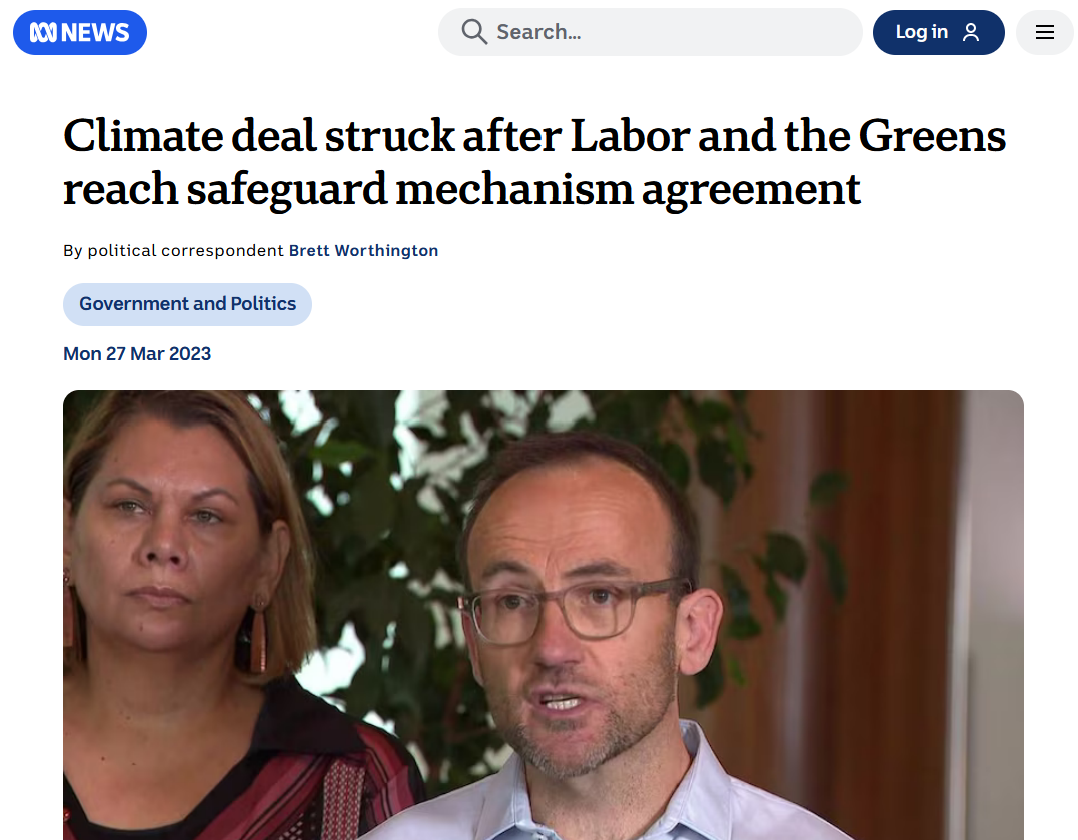
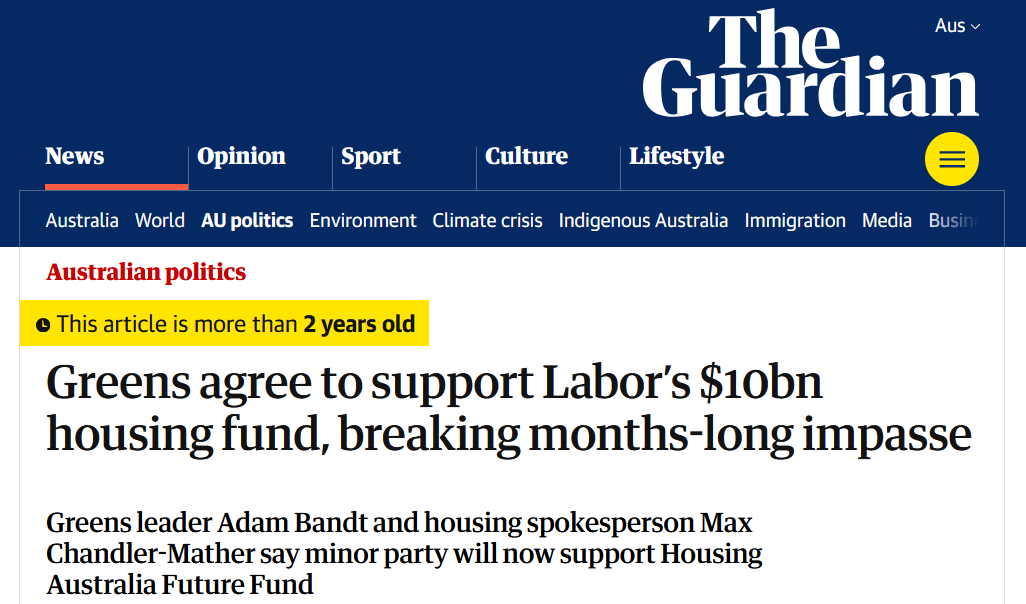
In a state like Queensland, where the hard-right LNP holds majority in a single-chamber parliament, there's much less pressure on our lone Greens MP, Michael Berkman, to roll over. Whereas at the national level, and in states where the Greens have 5+ MPs and perhaps the balance of power, Greens politicians and staffers spend so much time talking to each other, to the mainstream media, to centrist lobbyists, and to senior public servants who've been indoctrinated into neoliberalism, that their exposure to ordinary people outside the political establishment is comparatively limited.
I've seen some socialists argue that when Greens senators have made questionable calls to support federal Labor bills, it's simply because the Greens are "all small-l liberals" or "more interested in maintaining the capitalist system than transforming it."
I think that's certainly true of a (not-insignificant) minority of members and MPs, but it's a superficial and unsophisticated misdiagnosis of what's really going on.
In a hierarchical representative political system, even politicians and staffers who're genuinely keen on major systemic change can be seduced by or feel pressured into reformist strategies if their parties and wider movements for social change have no way to hold them accountable and insulate them against the pressure to moderate their positions, especially when those MPs are also democratically responsive to thousands of centrists/conservatives in their own electorates.
After all, if you're not winning votes, you're basically irrelevant. And most Australian voters aren't revolutionaries (yet).
A party needs robust structures, processes and cultural norms to protect its MPs from this pressure.
In our interview, Liam's answers to my questions about all this feel a little naive. He concedes that Queensland Socialists members probably won't all get a binding vote to tell future MPs how they should vote in parliament on controversial bills.
"Sometimes it isn’t really feasible to have a discussion of all members," he says.
That's fair enough. But it means that in practice, ordinary Queensland Socialists members won't have any more control and influence over how their MPs vote in parliament than Greens members currently do.
“I don’t think we’ve got this totally worked out yet," he concedes. "We’re pretty open to different ways to figure that out.”
“I think a principle would be having party leadership that isn’t just the electoral members and that has the ability to discipline elected members if they vote the wrong way.”
To me, that also sounds pretty much the same as the Greens.
While the Socialists' commitment to restrict future MPs to a teacher's wage might help a little, I can point to multiple examples of local councillors on low part-time salaries who've also succumbed to liberalism.
The other potential shields against co-option that Liam identifies – encouraging members to be active in unions, staying connected to protest movements etc. – are also all things the Greens do. Even where rank-and-file members have strong left-wing values and commitments to grassroots struggle, that doesn't automatically flow through to the behaviour of MPs.
Jonathan Sriranganathan
Vanguards within vanguards
Liam is at least clear that the initial political culture of Queensland Socialists leans heavily away from centrist compromise.
“My attitude is that we want to be a hard and militant minority and have to take positions that even when they’re not popular we have to do it based on our principles.”
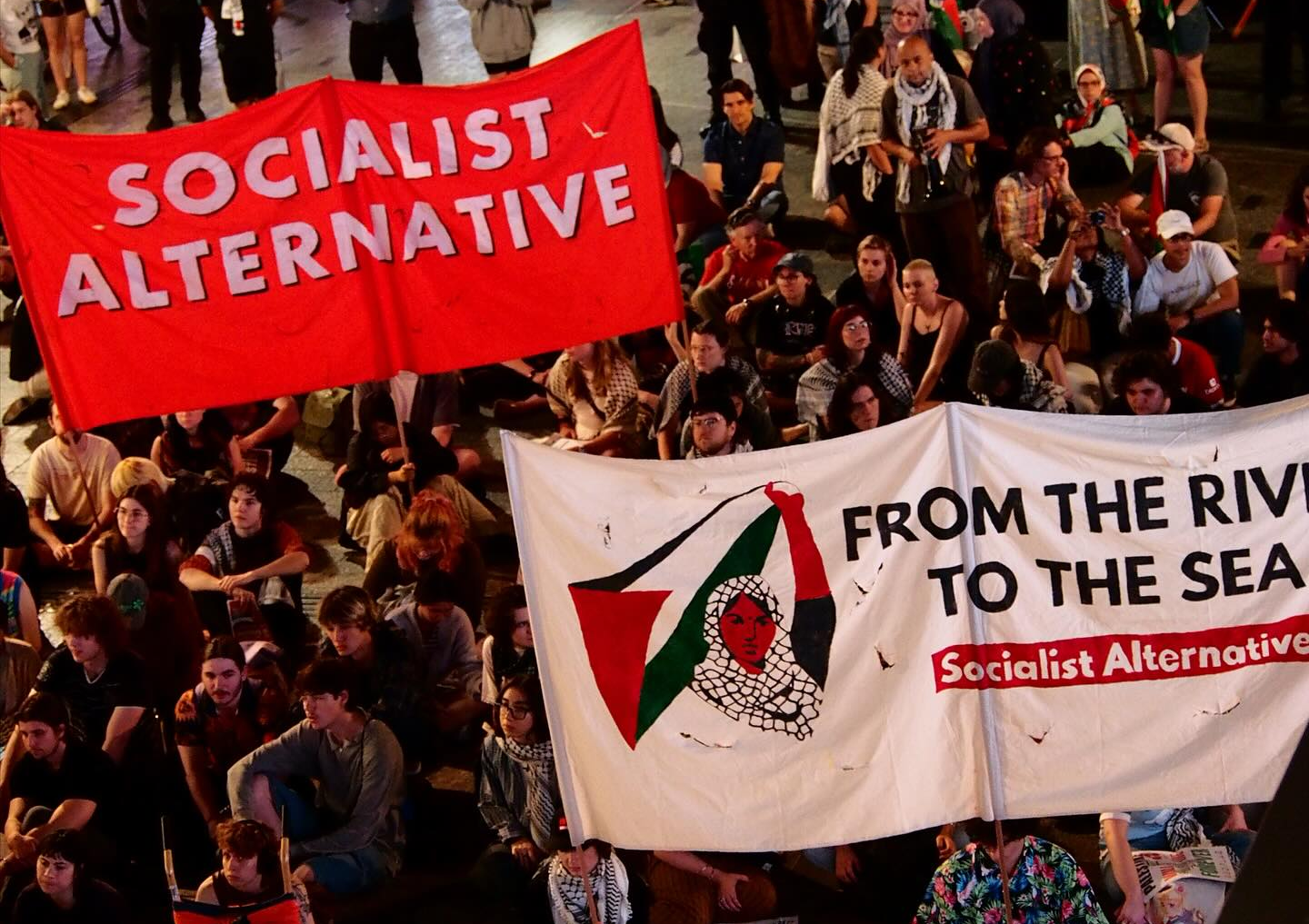
Socialist Alternative is a major factor here. Its members hold the majority of seats on the new Queensland Socialists executive committee, and SAlt organisers appear to be leading the messaging training sessions for campaign volunteers, facilitating party meetings etc.
I’ll save my specific criticisms of SAlt’s organising methods and tactics for another time (I should at least give their spokespeople a chance to respond to those critiques before I publish them). But broadly speaking, SAlt takes the view that movements for social change can easily be derailed by liberals/centrists if the majority of participants don’t already have a robust critique of capitalism and imperialism (not an unreasonable conclusion).
So they aim to insert a vanguard of revolutionary socialists into any emerging political force to steer it. Thus SAlt organisers frequently create or co-opt groups like Students for Palestine, Students for Climate Action etc. whenever there’s growing public concern about an issue.
SAlt seem to be following this pattern with Queensland Socialists. Liam acknowledges that SAlt members may caucus privately about what direction Queensland Socialists should take – for example, what policies the party should campaign on, which seats they should focus on – then all go to the Queensland Socialists meeting and argue for their agreed position.
As Liam puts it: “We think it’s an important democratic right to have internal groupings ... we’re not the only internal grouping within the [Queensland] Socialists – there’s also a grouping called the Communist Caucus.”
Defined factions or tendencies haven't emerged in the Greens, partly because the party makes most decisions through democratic consensus processes (apart from preselection ballots). Whereas in the majority voting systems used by the emerging Socialists parties, whoever controls 51% of the votes effectively wields 100% of the power.
It seems likely that in practice, Socialist Alternative's 70 or so members will function as a radical tail wagging the Queensland Socialists dog.
Of course if the vast majority of Queensland Socialists members (who are not affiliated with Socialist Alternative) are unhappy with how the SAlt-dominated executive committee is steering the party, they could theoretically just vote them out or call a general meeting to agree on a different strategy.
But those hundreds of non-affiliated Queensland Socialists members likely won't all have each other's contact details or accessible forums in which to organise.
From observing Socialist Alternative's track record in numerous campaigns over the years, I expect (but remain open to being proved wrong) that within party decision-making spaces where every member present gets a vote, they'll mobilise enough time-rich, SAlt-affiliated young people to control the outcome. Or if the broader Queensland Socialists membership outnumbers them and backs a tactic or policy that Socialist Alternative strongly opposes, SAlt members will quietly withdraw their labour or ignore the decision and do their own thing anyway (justified on the basis that the naive majority have been sucked in by liberal propaganda).
Liam insists Socialist Alternative wants Queensland Socialists to be legitimately democratic. I guess time will tell how feasible that is in a traditionally-structured party with effectively just one large faction.
I've never been a SAlt member, so I might be way off here, but my impression is that within the Queensland branch, the group's strategy is predominantly shaped by around 15 people who all share very similar politics and activism experiences. This means that even though Queensland Socialists will have 500+ members, key decisions will be led by a fairly small and insular vanguard. Given how diverse the voting public is, this might not be a good foundation for crafting messages and campaigns that appeal to your average worker or pensioner.
It's hard to predict how this kind of vanguardism might impact balance of power situations where future Socialist MPs must decide whether to support incremental reforms or hold out for bigger victories. In non-electoral campaigns, I've seen examples where SAlt have doggedly argued for maximalist no-compromise positions, and also situations where they've acted much more like reformists than revolutionaries.
What does seem clear to me though, is that for the foreseeable future, Queensland Socialists' key strategic decisions will be shaped by the Socialist Alternative bloc more-so than the broader party membership.
What does this mean for the Greens?
Queensland's preferential voting system means that even if the Queensland Socialists do well in elections, and start eating into the Greens primary vote, this won't significantly hurt the Greens' chances of winning seats.
In the same way that Labor felt able to ignore growing Greens support until the Greens got so popular that they were starting to win Labor seats, the Greens generally won't feel electorally threatened by the Socialists. This means there won't be much pressure on the party to adopt more radical positions unless anti-capitalist Greens campaigners also push for it.
But it would be arrogant of the Greens to dismiss the Socialists altogether.
The fact there are at least 500 left-leaning, politically-engaged Queenslanders who see value in contesting elections and are willing to join Queensland Socialists rather than the Queensland Greens reflects a growing sentiment that the Greens haven't been bold and radical enough when it really matters.
More importantly, the majority of Queensland Socialists recruits seem to be younger people who will likely have more time and energy for campaigning.
The Greens have never put a lot of effort into organising and recruitment on university or TAFE campuses. The larger uni campuses all have Greens-affiliated clubs, but the party itself doesn't allocate ongoing staffing resources towards campus organising, relying mostly on over-stretched staff in MP offices to do this work.
In contrast, Socialist Alternative pays a couple student activists in each state to organise other students on campus, and is now funnelling those people into Queensland Socialists. So while the Greens might not be worried about losing too many votes to Queensland Socialists, over the next few years they probably should be worried about losing hundreds of potential young volunteers who are attracted to the more overtly anti-capitalist brand.
The other tangible concern for the Greens will be if Queensland Socialists decide to contest Brisbane City Council elections, which use an optional preferential voting system.
The Liberal National Party routinely puts substantial resources into telling voters to 'just vote 1,' which discourages Labor, Greens and other minor party/independent voters from allocating preferences. This results in a high preference exhaustion rate that helps the LNP retain control of Brisbane even though their primary vote is below 50%. Basically, the more progressive minor parties that run, the harder it becomes for the Greens to win seats off the majors.
If the Socialists run in target Greens wards, this will make the Greens' path to victory slightly harder, and could prove decisive in tight contests. This gives the Queensland Socialists an obvious bargaining chip. They could approach the Greens and offer not to run in crucial council seats if the Greens commit to including certain initiatives and messages in their election campaign.
It's a shame Queensland Socialists weren't formally registered as a party in time for the Stafford by-election, as it would've given everyone a clearer indication of how much latent appetite there is for overtly socialist politics in suburban Brisbane. As it is, Liam might get 4% or 5% running on the ballot as an independent, but that won't tell us anything useful about support for socialism.
Right now, I don't see the Queensland Socialists as being a fundamentally different kind of political project from the Queensland Greens. The party structure and distribution of power seem fairly conventional, with the main tangible distinction being the central role of Socialist Alternative.
But they still hold a lot of value as a critical mirror for larger progressive parties. When Queensland Socialists put forward policies like "cap the number of homes an investor can own" or "limit politicians to the same salary as teachers" this poses a question for the Greens – 'if they can call for it, why can't you?' – which will hopefully pressure Larissa Waters, Michael Berkman etc. to be bolder, and help broaden the parameters of mainstream debate.
Currently, both parties are essentially pushing in the same direction. For Socialists who think the Greens are too centrist or reformist, the key question remains: what, in practice, are you actually doing differently to ensure you don't go down the same path?

Phew! Geez that was a deep dive wasn't it?
If you value political writing that digs beneath the surface, please sign up for a paid subscription so I can put more time into this work (I promise I'll use some of that time to cut out unnecessary paragraphs in future articles).
Thanks heaps!
Jonathan Sriranganathan Jonathan Sriranganathan

Member discussion