The deeper argument for cultural diversity
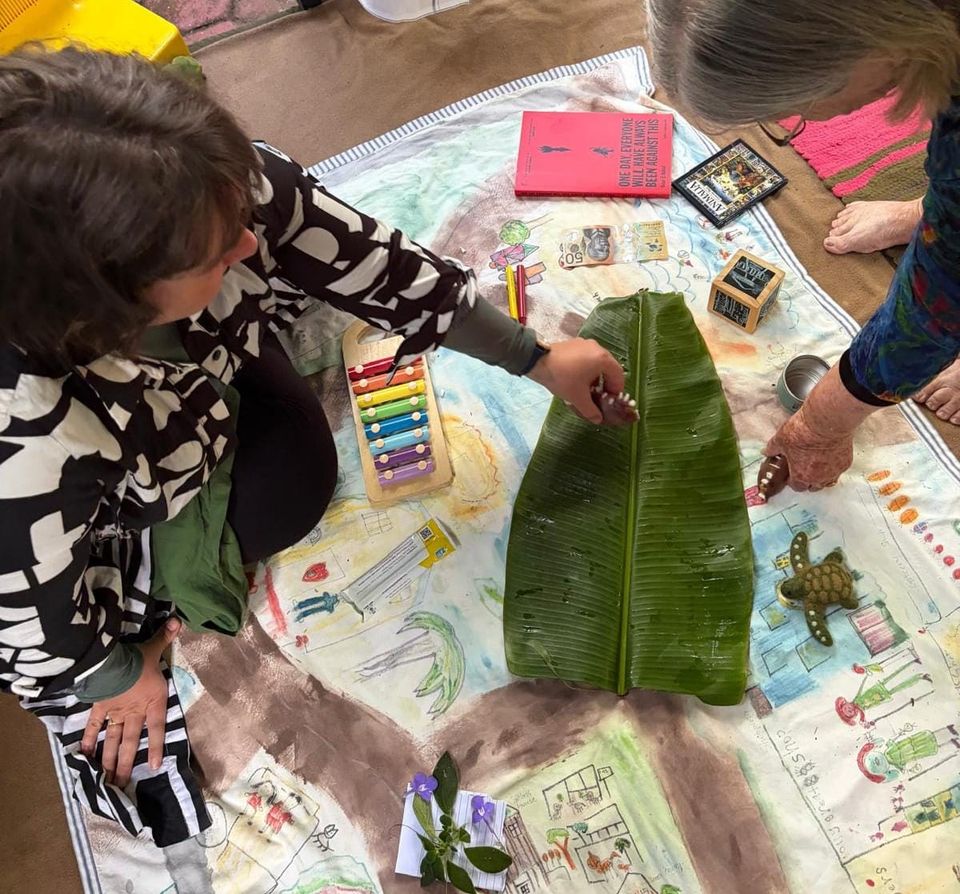
When confronted with racist, irrational calls for 'monoculturalism,' many of us seem unable to offer effective counter-arguments beyond "but don't you love ethnic food!?"
The most commonly articulated benefits of multiculturalism boil down to the idea that life is better and more interesting when our communities feature a wider range of music, dance, food and fashion. I definitely agree with that perspective, and I'll even concede that for some people who are nervous about unrestricted immigration, celebrating different cultures' cuisines and entertainment forms might be compelling.
But it risks flattening and obscuring some of the most significant benefits of promoting cultural diversity and cross-cultural exchange.
Entire academic fields – anthropology, cultural studies, ethnolinguistics etc. – have evolved to study this stuff (often with vigorous methodological and philosophical divergences between disciplines). Whole libraries of research unpack the differences between cultures and the advantages of encouraging cultures to mix, including important debates about what terms like 'multiculturalism' and 'cultural pluralism' even mean (spoiler: definitions vary). But very little of that knowledge seems to be informing Australia's current mainstream political debates about multiculturalism.
This is particularly frustrating when you remember that Australia has been a culturally diverse continent for tens of thousands of years, with many different Aboriginal cultures and language groups co-existing and influencing each other.
Personally I'm more a fan of polyculturalism than orthodox multiculturalism. Decades of government multiculturalism policies have reinforced Euro-centric boundaries between supposedly-static ethnic and linguistic groups through siloed funding of ethnic community associations, cultural festivals etc. This has left us all culturally poorer than if Australia had embraced a more anarchic and fluid approach to cultural mixing. At its worst, liberal multiculturalism teaches us to engage with other cultures only by consuming whatever superficial elements can be easily packaged up and commercialised.
But putting aside those debates for now, the main reason our society should embrace some kind of cultural pluralism or cultural diversity is not simply so Australians get access to a wider range of foods or musical genres, but because different cultures see the world differently.
They value different things in different ways.
And they remind us that different ways of life are possible.
In modern Australian society, what we value, how we relate to the non-human world and how we solve emerging problems is heavily shaped and constrained by capitalism. So promoting a healthy contest of cultural values is an essential counter-weight to the dominant western capitalist cultural narrative that you should only worry about small in-groups of close friends and immediate family, competing selfishly with everyone else in pursuit of maximum financial wealth.
We have much more to learn from encounters with different cultures than how to cook the perfect paneer kofta or dance to a samba rhythm.
A clash of cultural norms doesn't have to be abrasive. It can also be generative and illuminating...
How should we manage conflict? If someone says something you strongly disagree with, is it better to avoid the topic to protect their feelings and preserve the peace, or is starting an intense argument to thrash out the matter actually a greater show of respect for your relationship?
Do we defer uncritically to leaders and authority figures, or treat their power with intense scepticism?
How should we care for and show respect towards our elders? Do we warehouse them in nursing homes out of sight and mind, or do we work through the messy challenges of inter-generational co-living and socialising?
How much do we value education? And what kinds of education are most important? Do we think young people should start working in paid jobs before they've even finished high school? Or focus exclusively on their academic studies and exploring what paths they want to take in life?
Is intellectualism held in high regard, or treated as a sign someone is 'out of touch'?
When raising young children, do we rely on nuclear family models where women stay home and shoulder most of the care work alone? Do we expect government-subsidised services to share the load? Or do we strive to establish broader communal childcare networks involving friends, neighbours and extended family?
Is our environment simply an amalgamation of resources that we endlessly extract? Do we see other animals merely as products waiting to be processed for meat or wool or milk? Or do we see ourselves as inextricably – perhaps even spiritually – connected to the non-human world, with moral responsibilities to care for and protect it?
What is our relationship to abstract concepts like time? Is it linear? Or circular? Does it flow consistently like tap water, or in irregular bursts and pulses like summer storms? Is being punctual a show of respect to your co-workers, or is lack of punctuality an act of anti-capitalist resistance against your exploitative boss? Does an injustice experienced 20 years ago matter just as much as an injustice that occurred yesterday?
There are so many questions that different cultures might offer differing answers to. A hypothetical monocultural society probably wouldn't even be capable of critically debating such issues.
Currently in Australia, cultural exchange is still contaminated by power imbalances between the dominant colonial-capitalist culture and other racialised groups (whether First Nations cultures or other Asian, African, American and continental European cultures). Even supposedly inclusive government jargon like 'culturally and linguistically diverse communities' reinscribes this inequality by recognising a patriarchal Anglo-Australian baseline that other cultures are seen as 'diverse' in relation to.
In a truly pluralistic society, where different cultures are endlessly interacting and cross-pollinating on a more even footing, people can engage with a wider range of worldviews and possibilities for how we structure our lives, making informed choices about what approach best suits a given context.
The folk traditions – the stories, dances, songs, clothing, culinary practices – that a superficial conception of multiculturalism focuses on will often encode and pass on cultural norms, values and moral lessons. Ultimately though, it's those contrasting values and worldviews themselves that more meaningfully distinguish cultures, and are the most substantive advantage of cultural pluralism.
Perhaps one reason so many right-wing political figures rave against multiculturalism is because exposure to different cultures shows us that there are many different ways for humans to live and organise our communities.
Cross-cultural encounters can remind us that a life of endless drudgery, precarity, hyper-competitive individualism and spiritual impoverishment under capitalism is not the only option on the table.
Anglo-centric, capitalism-friendly multiculturalism has limited our horizons by obscuring the more fundamental differences between cultures – and thus the deeper benefits of cultural mixing.
But when you start unpacking those deeper divergences – individualistic vs collectivistic, hierarchical vs egalitarian etc. – you learn much more about yourself and your own community, and can have more far meaningful conversations about what direction we should all be heading in together.
Cultural diversity is valuable because it offers us access to a wider range of philosophical perspectives and practical possibilities for how we organise society, not just a wider range of recipes.
Someone please mention this to the 'progressive' politicians and ABC presenters whose only defense of cultural diversity seems to be "but we wouldn't have kebabs!"

I'd love to know what people think of these ideas. Feel free to leave a comment below. And if you value writing like this being freely available to the wider public, without paywalls or intrusive ads, please consider subscribing to my newsletter.


Member discussion